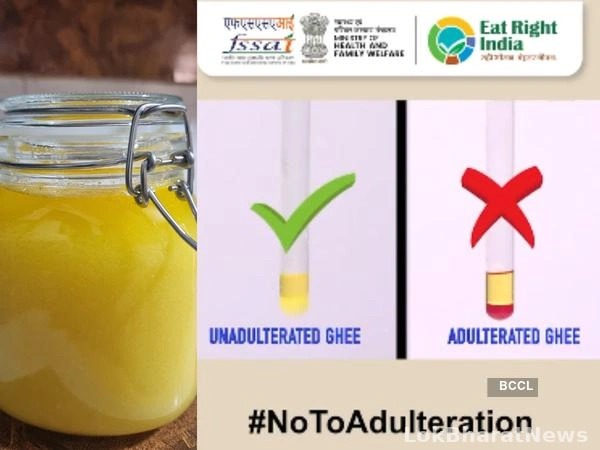
Food safety officials across India are uncovering a growing number of fake ghee operations where cheap palm oil and vegetable fats are allegedly being sold as pure cow ghee.
Recent raids in Gujarat, Rajasthan, Hyderabad and Bengaluru exposed large adulteration networks targeting consumers with fake branding and misleading labels.
Authorities say many operators mix palm oil, vanaspati and synthetic flavouring to imitate the smell, texture and colour of authentic desi ghee.
Investigators believe these products are reaching homes, restaurants, sweet shops and local markets in large quantities.
Fake cow ghee scam spreading across India
The fake cow ghee scam has raised concern because ghee is widely used in Indian households for cooking, religious rituals and traditional food preparation.
In Surat, police recently busted a suspected fake ghee manufacturing unit operating under premium branding. Officials recovered packaging machines, artificial flavouring agents and counterfeit stickers during the raid.
Hyderabad authorities also seized more than 3,000 kg of adulterated cream and fake ghee allegedly mixed with palm oil and vanaspati. Officials said the products were being supplied to hotels, caterers and consumers.
Health officials in Rajasthan warned consumers about rising cases of counterfeit branded ghee being sold across local markets. Investigators found that some operators blended palm oil with low-grade fats and artificial fragrance before packaging the products as pure cow ghee.
Earlier, Bengaluru officials uncovered another fake branded ghee racket involving thousands of litres of adulterated stock. Authorities suspect plant fats, including palm oil and coconut oil, were used to mimic real ghee.
Also Read: How Heatwaves Affect Mental Health And Sleep Patterns
Why palm oil is used in fake ghee
Experts say palm oil and vanaspati are commonly used because they are significantly cheaper than dairy-based ghee.
Manufacturers allegedly add synthetic essence and colouring agents to create a ghee-like aroma and appearance. Some reports also mention the use of chemicals designed to pass basic purity checks.
Food safety experts warn that long-term consumption of adulterated ghee may increase health risks because of trans fats and poor-quality oils.
Doctors say excessive intake may contribute to cholesterol problems, digestive issues and inflammation.
Authorities are now urging consumers to verify packaging carefully and purchase products only from trusted sources.
Officials also recommend checking FSSAI licence numbers and avoiding unusually cheap products sold under premium labels.
How consumers can identify suspicious ghee
Food experts suggest several simple checks that may help consumers spot suspicious products at home.
Pure ghee usually melts evenly and carries a natural dairy aroma. Fake products mixed with palm oil may develop grainy layers, unusual smell or greasy residue after cooling.
Consumers are also advised to avoid products with damaged packaging, unclear labelling or unusually bright colour.
Health officials say trusted branding alone should not guarantee authenticity because counterfeit packaging has become increasingly sophisticated.
The fake cow ghee scam has once again highlighted the growing challenge of food adulteration in India as authorities continue investigations into distribution networks and illegal manufacturing units across multiple states.