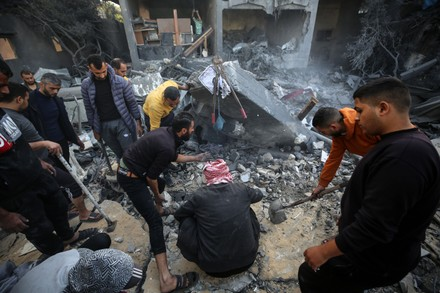
🟥 Iran death toll & the strike situation Iranian authorities and the Iranian Red Crescent report that at least 555 people have been killed in Iran so far due to ongoing U.S.–Israel airstrikes and related combat operations. Many cities and military sites across Iran have been hit. The fighting has spread beyond Iran’s borders, with strikes and counter-strikes reported in Lebanon, Iraq, Kuwait, Cyprus, Saudi Arabia, and other Gulf states.
Iran toll hits 555 as US jets crash in Kuwait amid widening US–Iran conflict
✈️ US aircraft incidents in Kuwait Kuwait’s defence ministry has confirmed that multiple U.S. warplanes have crashed or been downed near bases in Kuwait, amid intense combat operations and retaliatory strikes. Reports indicate that several jets were lost, but all crew members survived and pilots ejected safely in at least one confirmed case. 🇺🇸 U.S. military casualties U.S. Central Command and multiple news agencies confirm that 3 U.S. service members have been killed and five seriously wounded in the conflict, with additional personnel suffering minor injuries. These are among the first confirmed U.S. combat deaths since the latest wave of operations began.
555 killed in Iran; multiple US aircraft crash in Kuwait during conflict
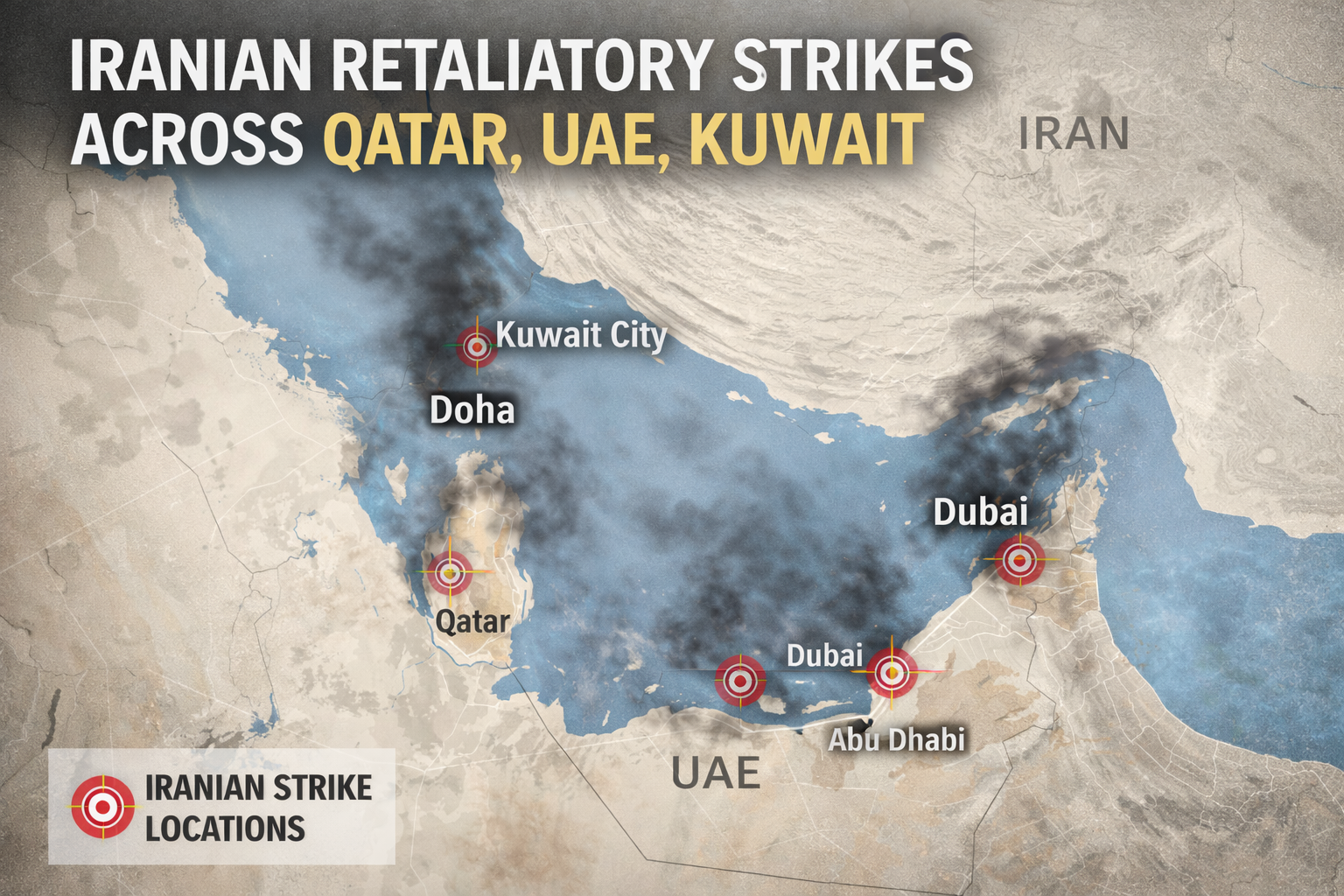
🔥 Wider regional escalation Iranian missiles and drones have targeted not only Israel but also U.S. bases and allied sites in Bahrain, Kuwait, Qatar, UAE and beyond. Israel, in turn, is conducting strikes against Hezbollah positions in Lebanon, with additional civilian and military casualties reported there. The conflict is affecting global oil markets, international air travel, and prompting evacuations and heightened defence postures throughout the region.

🟥 Iran death toll & the strike situation Iranian authorities and the Iranian Red Crescent report that at least 555 people have been killed in Iran so far due to ongoing U.S.–Israel airstrikes and related combat operations. Many cities and military sites across Iran have been hit. The fighting has spread beyond Iran’s borders, with strikes and counter-strikes reported in Lebanon, Iraq, Kuwait, Cyprus, Saudi Arabia, and other Gulf states.
✈️ US aircraft incidents in Kuwait Kuwait’s defence ministry has confirmed that multiple U.S. warplanes have crashed or been downed near bases in Kuwait, amid intense combat operations and retaliatory strikes. Reports indicate that several jets were lost, but all crew members survived and pilots ejected safely in at least one confirmed case. 🇺🇸 U.S. military casualties U.S. Central Command and multiple news agencies confirm that 3 U.S. service members have been killed and five seriously wounded in the conflict, with additional personnel suffering minor injuries. These are among the first confirmed U.S. combat deaths since the latest wave of operations began.
🔥 Wider regional escalation Iranian missiles and drones have targeted not only Israel but also U.S. bases and allied sites in Bahrain, Kuwait, Qatar, UAE and beyond. Israel, in turn, is conducting strikes against Hezbollah positions in Lebanon, with additional civilian and military casualties reported there. The conflict is affecting global oil markets, international air travel, and prompting evacuations and heightened defence postures throughout the region.
🟥 Iran’s Revolutionary Guard has announced an escalation in counter-operations against US forces and allied infrastructure, launching missile and drone strikes targeting military bases in Kuwait and other Gulf nations. Reports indicate heightened air-defense activity across the region, with claims of US aircraft incidents in Kuwaiti airspace. Tehran describes these strikes as direct retaliation for attacks on its leadership and key military facilities.

🟥 The regional crisis is deepening both on humanitarian and diplomatic fronts, with retaliatory attacks spilling into civilian-populated areas and leaving several people injured in Kuwait and nearby Gulf nations. As tensions escalate across borders, governments in the region have convened urgent security meetings to review coordination, strengthen joint response mechanisms, and evaluate strategies to prevent further cross-border instability.
🟥 Iran death toll & the strike situation Iranian authorities and the Iranian Red Crescent report that at least 555 people have been killed in Iran so far due to ongoing U.S.–Israel airstrikes and related combat operations. Many cities and military sites across Iran have been hit. The fighting has spread beyond Iran’s borders, with strikes and counter-strikes reported in Lebanon, Iraq, Kuwait, Cyprus, Saudi Arabia, and other Gulf states.
✈️ US aircraft incidents in Kuwait Kuwait’s defence ministry has confirmed that multiple U.S. warplanes have crashed or been downed near bases in Kuwait, amid intense combat operations and retaliatory strikes. Reports indicate that several jets were lost, but all crew members survived and pilots ejected safely in at least one confirmed case. 🇺🇸 U.S. military casualties U.S. Central Command and multiple news agencies confirm that 3 U.S. service members have been killed and five seriously wounded in the conflict, with additional personnel suffering minor injuries. These are among the first confirmed U.S. combat deaths since the latest wave of operations began.


✈️ US aircraft incidents in Kuwait Kuwait’s defence ministry has confirmed that multiple U.S. warplanes have crashed or been downed near bases in Kuwait, amid intense combat operations and retaliatory strikes. Reports indicate that several jets were lost, but all crew members survived and pilots ejected safely in at least one confirmed.
Escalation in the Gulf: Iran Strikes US Military Assets Across Region, Several US Warplanes Downed Over Kuwait
🔴 Iran’s retaliation has broadened into a widespread campaign targeting US military assets across the Gulf, with Tehran’s Islamic Revolutionary Guard Corps asserting that missiles and armed drones were launched at US bases and allied positions in multiple Gulf states, including Kuwait, Qatar, Bahrain, the UAE and Saudi Arabia in response to recent US-Israeli strikes on Iran.
✈️ Multiple US military aircraft have crashed in Kuwaiti territory amid the fighting. Kuwait’s Defence Ministry confirmed several American warplanes had gone down in its airspace, with pilots reportedly rescued and in stable condition after ejection.
💥 Iran has also claimed direct hits on US naval targets and logistics vessels in the region as part of its Operation True Promise 4, including strikes on ammunition ships and bases, signaling a more aggressive phase of retaliation.
📍 Regional impact continues to unfold — Gulf countries such as Saudi Arabia have formally condemned Iranian attacks, summoning Tehran’s ambassador and condemning violations of sovereignty amid the escalating conflict.
🚫 Airspace and civilian infrastructure disruptions have extended beyond strictly military targets, with airports and key urban areas in Kuwait, Dubai, Abu Dhabi, and Bahrain damaged or forced into emergency responses as Iran’s missiles and drones cross borders.
🧨 The broader military confrontation marks one of the most geographically expansive confrontations between Iran and US-led forces in recent decades, with anti-US directives from Tehran and increasing air-defence engagements across Gulf airspace adding to volatility and civilian risk.
🧨 What’s Happening Now
Major military escalation

-
A joint military campaign by the United States and Israel has been underway since late February 2026, involving large-scale airstrikes on Iranian military and strategic targets. Millions of residents in Tehran and other cities are affected, with emergency measures in place.
-
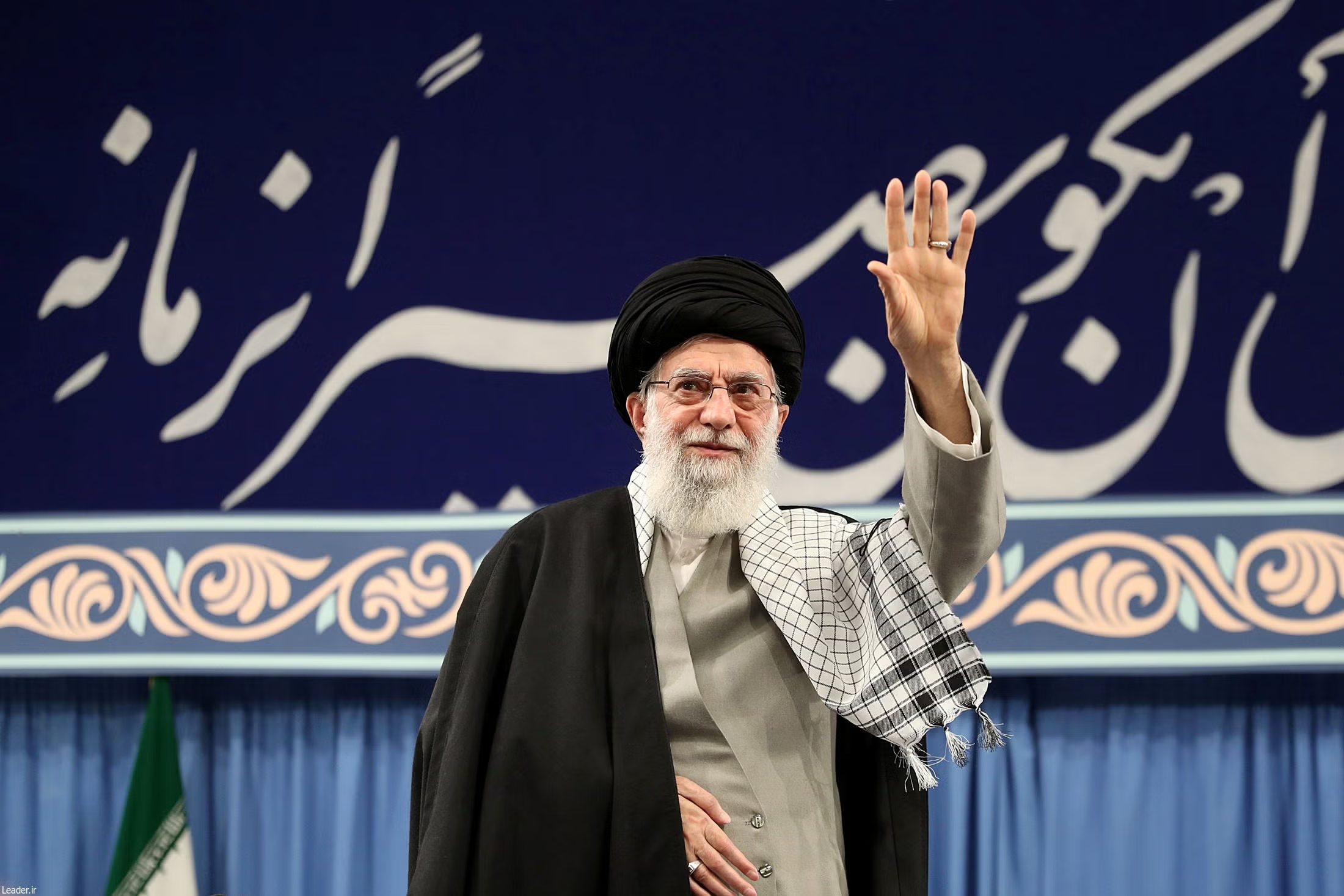
The conflict intensified sharply after the killing of Iran’s Supreme Leader, Ayatollah Ali Khamenei in an airstrike on 28 February 2026 — an act confirmed by Iran’s government and part of the broader US-Israel operations.
Retaliation and spread of fighting
-
Iran has launched missile and drone attacks against Israel and US bases throughout the Middle East, hitting sites in the Gulf, including strikes near Dubai and other Emirates.
-
The fighting has drawn in Iran-backed militia groups, particularly Hezbollah in Lebanon, which have exchanged fire with Israeli forces along the Israel-Lebanon border.
-
Conflicts have caused casualties on multiple sides — hundreds reported killed and injured in Iran alone, along with casualties among US forces and regional coalitions.
🌍 Regional & Global Impacts
Wider Middle East tensions
-
Gulf states such as Saudi Arabia have protested Iranian overflights or attacks and summoned diplomats, diplomatic strains across the region.
-
Countries like Lebanon are grappling with displacement of civilians due to airstrikes and instability.
Energy & economic effects
-
The conflict has disrupted oil and liquefied natural gas (LNG) flows, particularly near the Strait of Hormuz — a critical maritime route for about 20% of global oil exports. Several ships have halted transit due to danger, pushing freight and energy prices higher.
-
Major economies in Asia that rely on Middle East oil (including India, Pakistan, Bangladesh, Japan, etc.) are facing supply disruption risks and price volatility.
📌 Humanitarian and Civilian Situations
-
Schools and workplaces have shut down in many cities across Iran and Israel due to security concerns after missile strikes and escalations.
-
Thousands of foreign nationals, including students and workers (e.g., many Indians in Iran and Gulf countries), are reported stuck or seeking evacuation due to travel disruptions and rising conflict.
🧠 Background Causes & Context
Political unrest in Iran
Even before this war phase, Iran had seen large anti-government protests in late 2025 and early 2026, triggered by economic collapse and rising discontent with political repression — contributing to internal instability.
Decapitation strategy
The targeted killing of Iran’s supreme leader and other military officials represents a strategic move by the US/Israel aimed at debilitating Tehran’s command structure, although such tactics also heighten the risk of wider escalation.
🕊 What’s Next?
-
Analysts believe short-term volatility will remain high, with intense exchanges possible over the coming days or weeks before any diplomatic recalibration can take place.
-
A prolonged broad war would likely worsen economic strain in Iran, further destabilize its society, and heighten risks of more nations being drawn in.
Missile Fire Lights Up Skies Over Tehran Amid Escalating Conflict.
As the **intense military confrontation between Iran and the combined forces of United States and Israel continues, the night skies over Tehran, Iran’s capital, have been dramatically illuminated by missile streaks and explosions — a stark indicator of how far the regional war has expanded.
🔥 Surge in Missile Activity

In the past 48 hours, Iranian air and civilian areas have been rocked by repeated missile and drone activity following unprecedented strikes on key military and leadership targets earlier in the conflict. Sirens blared across Tehran as smoke and fireballs lit up the skyline, creating scenes reminiscent of wartime.
Analysts say these missile trajectories are both retaliatory responses and attempts to penetrate enemy airspace, highlighting how the strategic balance in the conflict has shifted from isolated strikes to sustained aerial exchanges.
💥 Background to the Escalation
The flare-ups over the Iranian capital come after coordinated airstrikes by U.S. and Israeli forces targeted government and military infrastructure across Iran — including central districts of Tehran — in what they described as pre-emptive operations against perceived threats. These strikes have reportedly disrupted senior leadership networks and triggered a fierce Iranian military response.
State media and foreign reports confirm that Iran has fired missiles not only toward Israeli territory but also at American military installations across the Gulf region, drawing international attention to the expanding theatre of conflict.
🚨 Impact on Civilians

Witnesses in Tehran reported roads and buildings shaken by blasts, while emergency sirens continued late into the night. Residents described looking skyward as tracer lines and explosions punctured the darkness — a chilling reminder of how deeply the war has entered everyday life in the city.
Local authorities have warned civilians to seek shelter as the danger persists, underscoring how urban far from frontline borders are now part of this widened conflict.
🌍 Wider Regional Consequences
The missile salvos visible over Tehran are not isolated; similar military responses have been reported in Gulf states such as the United Arab Emirates and Kuwait, where Iranian missiles and drones have struck or been intercepted. This has not only raised the stakes militarily but also threatened vital trade routes such as those in the Strait of Hormuz, affecting global oil and energy markets.
International diplomatic efforts continue amid rising calls for de-escalation, but for now, the spectacle of missiles crossing the night sky over Tehran stands as one of the most vivid symbols of how dramatically the conflict has evolved.
🔹 1. Conflict Widens Across Region
The US-Israel campaign against Iran has now spread beyond Iranian territory. Hezbollah, a key Iranian allied militia in Lebanon, has entered the fight, firing missiles into Israel, prompting heavy Israeli strikes on Hezbollah strongholds in Beirut and the Beca Valley. Civilians are fleeing affected areas amid fears of a larger Lebanon conflict.
🔹 2. Government Responses & Global Pressure
The European Union (EU) issued a joint call for maximum restraint and respect for international law amid the spiralling crisis. EU ministers discussed the dangers of unchecked escalation, including humanitarian concerns and economic disruptions from blockaded trade routes like the Strait of Hormuz.
🔹 3. Airspace & Transportation Chaos
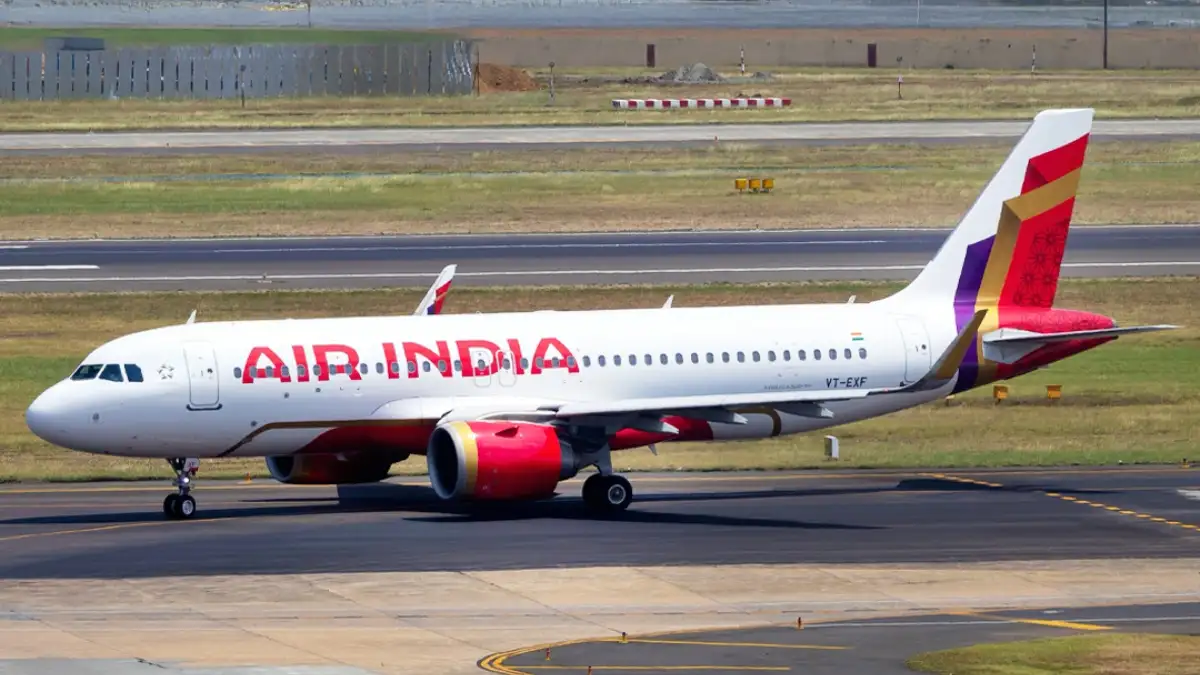
Civil aviation across the Gulf has been heavily disrupted due to the conflict, with authorities at Sharjah International Airport (UAE) issuing travel advisories after temporary airspace closures and flight delays or cancellations.
🔹 4. Worldwide Diplomatic Reactions
Countries around the world are responding differently — while the US and Israel remain committed to their military campaign, many governments are urging for immediate de-escalation, warning that this conflict could ignite a broader Middle East war with unpredictable consequences.
🔹 5. Ongoing Major Military Operations
The US president has stated that military operations against Iran will continue until all strategic objectives are met, underlining the seriousness and longevity of the conflict.
🌍 Deepening Crisis: Key Angles to Understand

🔥 Why This Conflict Escalated
The current round of war — described by some major news outlets as outright war between Iran, the US, and Israel — began after large-scale coordinated strikes on Iran by US and Israeli forces. These attacks reportedly targeted Iranian military infrastructure and leadership canters, significantly increasing hostilities.
Most notably, Iran’s Supreme Leader, Ayatollah Ali Khamenei, was killed in a targeted strike, a move that has profoundly affected Iranian politics and public sentiment, feeling strong retaliatory actions.
🛡️ Retaliation Beyond Borders

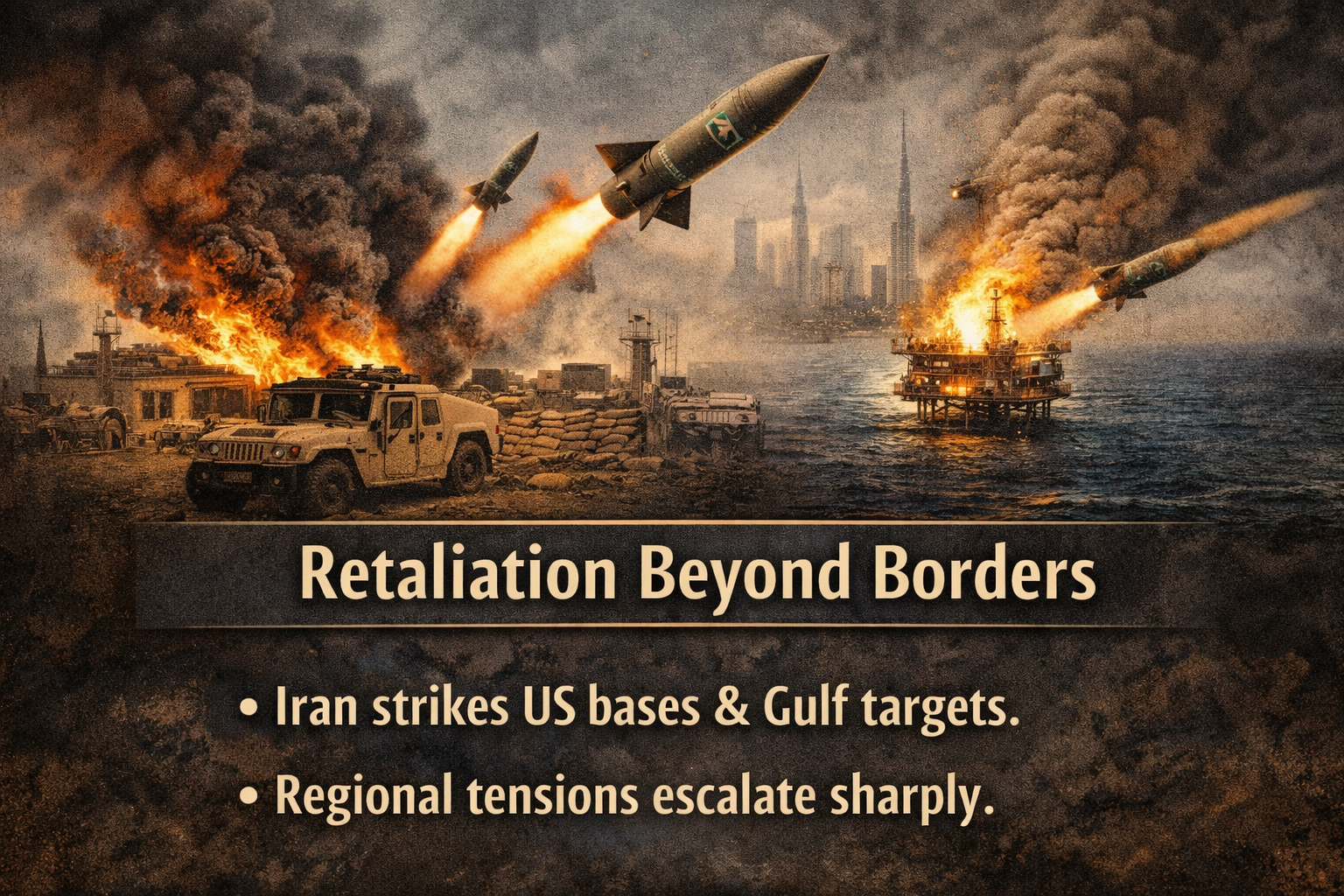
Iran’s response hasn’t been limited to missiles at Israel — it has also struck US military bases in the Gulf and targets in Gulf Arab states hosting American assets. This has alarmed neigh boring countries, causing diplomatic confrontations such as Saudi Arabia summoning Iran’s ambassador over attacks on its territory.
📉 Economic & Trade Impacts

The conflict has stranded international shipping and fuel exports near the Strait of Hormuz, a
critical route for global energy — prompting fears of rising oil prices and broader economic instability if the standoff continues. Analysts warn that disruption of this artery could materially impact energy markets worldwide.
🕊️ Global Diplomacy at Work
Despite heavy fighting, diplomatic efforts continue behind the scenes, with some nations — including EU members and global powers — pushing for ceasefire talks and cautioning against further escalation that could embroil the entire Middle East.
🕊️ Global Diplomacy at Work
Despite heavy fighting, diplomatic efforts continue behind the scenes, with some nations — including EU members and global powers — pushing for ceasefire talks and cautioning against further escalation that could embroil the entire Middle East.