Trump Proposes U.S. Toll on Strait of Hormuz, Shaking Global Trade Norms
Former U.S. President Donald Trump has suggested that the United States could charge a toll on ships passing through the Strait of Hormuz, a key corridor connecting the Persian Gulf to the Gulf of Oman. This strait handles nearly 30% of the world’s daily oil shipments, making it critical for global trade and energy supply. Trump argued that, with the U.S.’s strong military presence in the region, it could assert control and collect fees. This idea marks a major departure from long-standing international rules, which have traditionally allowed free passage for all vessels.
Strategic Importance of the Strait
The Strait of Hormuz is narrow but extremely important. Any disruption can:
- Spike global oil prices
- Affect energy-dependent economies
- Create instability in international shipping
Iran has recently strengthened its control over the strait, raising concerns about the safety of commercial vessels. Experts note that the strait is not only vital for energy supply but also a strategic chokepoint that affects trade, diplomacy, and military planning. Trump’s proposal shows how nations might use military power to gain economic leverage.
Trump’s Statement and Rationale
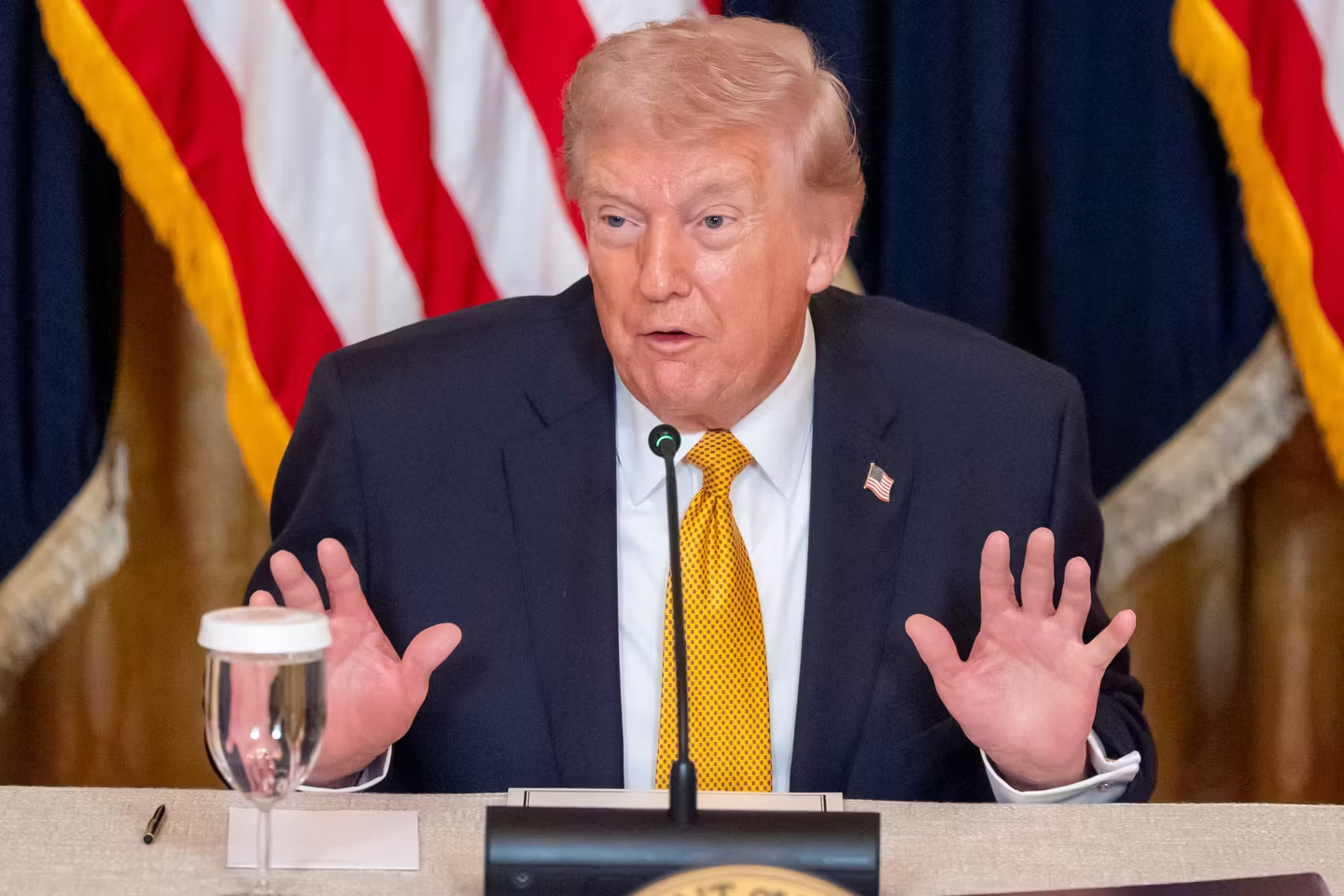
Trump said during a press briefing:
“Why shouldn’t we charge tolls? We have secured the advantage.”
He suggested that the U.S. could convert military dominance into economic gain. Traditionally, international law ensures free navigation through waterways like the Strait of Hormuz. Charging tolls would challenge this principle. Analysts say this is a bold, controversial approach that connects power, strategy, and economics in a new way.
Global Reactions
The proposal has caused concern worldwide. Legal experts warn that charging tolls could violate maritime law and disrupt decades of established norms. Countries dependent on Middle Eastern oil, including Japan, India, and European nations, fear higher shipping costs and potential conflicts. Shipping companies are also evaluating the impact on insurance, logistics, and overall trade efficiency. Experts caution that this could set a precedent, encouraging other powerful nations to monetize strategic waterways.
Energy Market Implications
Even the perception of restricted access could push oil and gas prices higher, affecting Asia and Europe. Multinational energy companies worry about supply chain disruptions and price volatility. Analysts note that any change in the strait’s management could have ripple effects across the global economy, highlighting the strait’s vital role.
Iran’s Response
Iran has historically used its location to influence shipping. Recently, Tehran tightened control over vessels and reportedly considered charging transit fees. Trump’s toll proposal directly challenges Iran’s authority, creating a potential power struggle over this crucial waterway. Diplomats worry that competing claims could escalate tensions in an already volatile region.
Potential Global Consequences
If implemented, a U.S.-controlled toll could:
- Change how strategic waterways are managed
- Force energy-importing countries to seek U.S. approval for safe passage
- Increase regional tensions and trade disruptions
- Challenge international norms and agreements
Experts warn that this could reshape global maritime policy, alliances, and trade relationships.
Conclusion
Trump’s toll idea, whether symbolic or actionable, has sparked debate about the future of global maritime law, energy security, and the link between military power and economic influence. The Strait of Hormuz, a critical route for trade and energy, now stands at the center of discussions that could have long-term consequences for global commerce and regional stability.