Tehran had a succession plan in place for the peaceful death of its Supreme Leader. Can it keep control now the countries at war?

Two weeks ago something unprecedented happened on Iranian state TV — a reporter blurted out “death to Khamenei” when he was live on air. The journalist was covering state-organized rallies marking the anniversary of the 1979 revolution that ushered in Iran’s theocratic regime and he’d meant to say “death to America.”
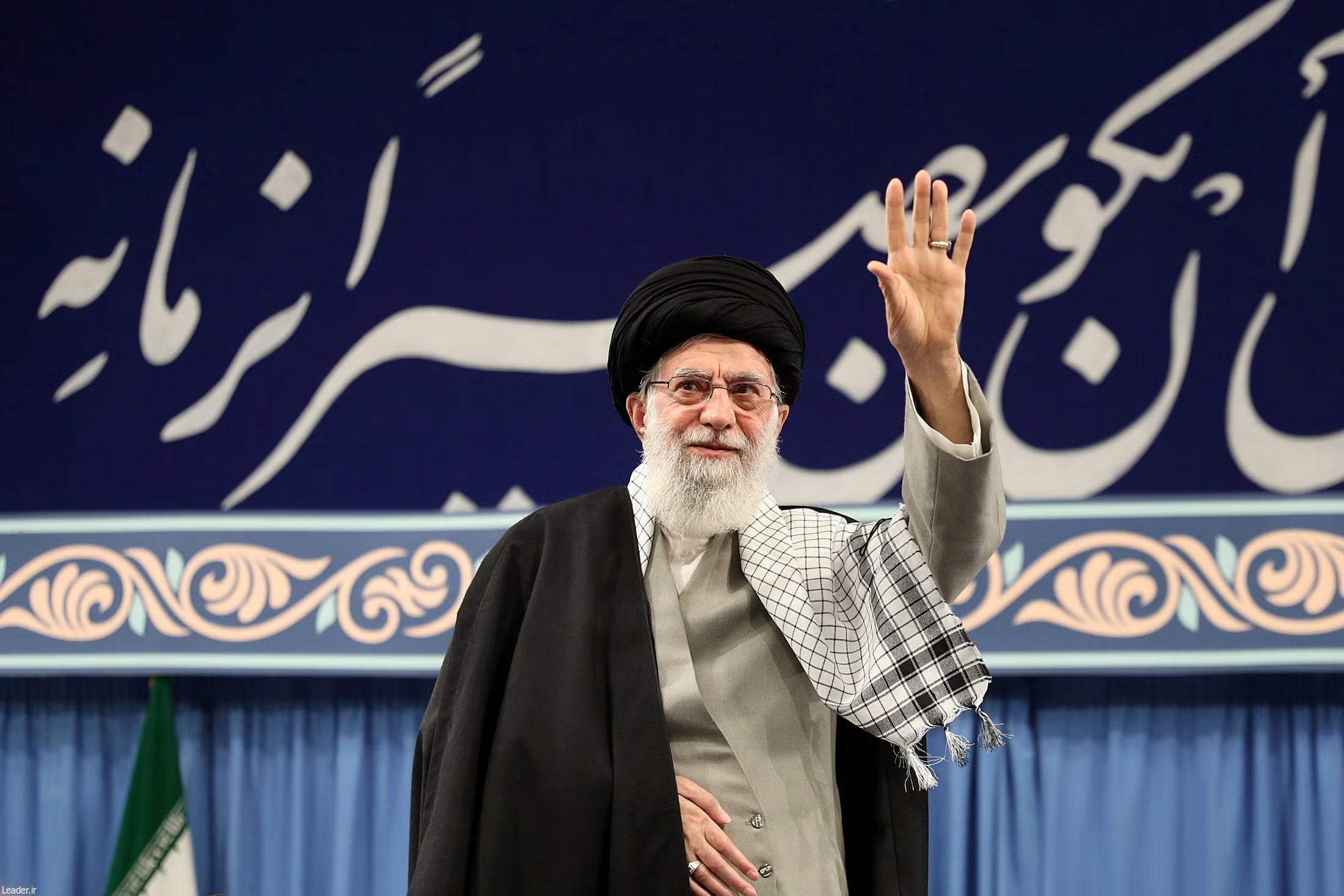
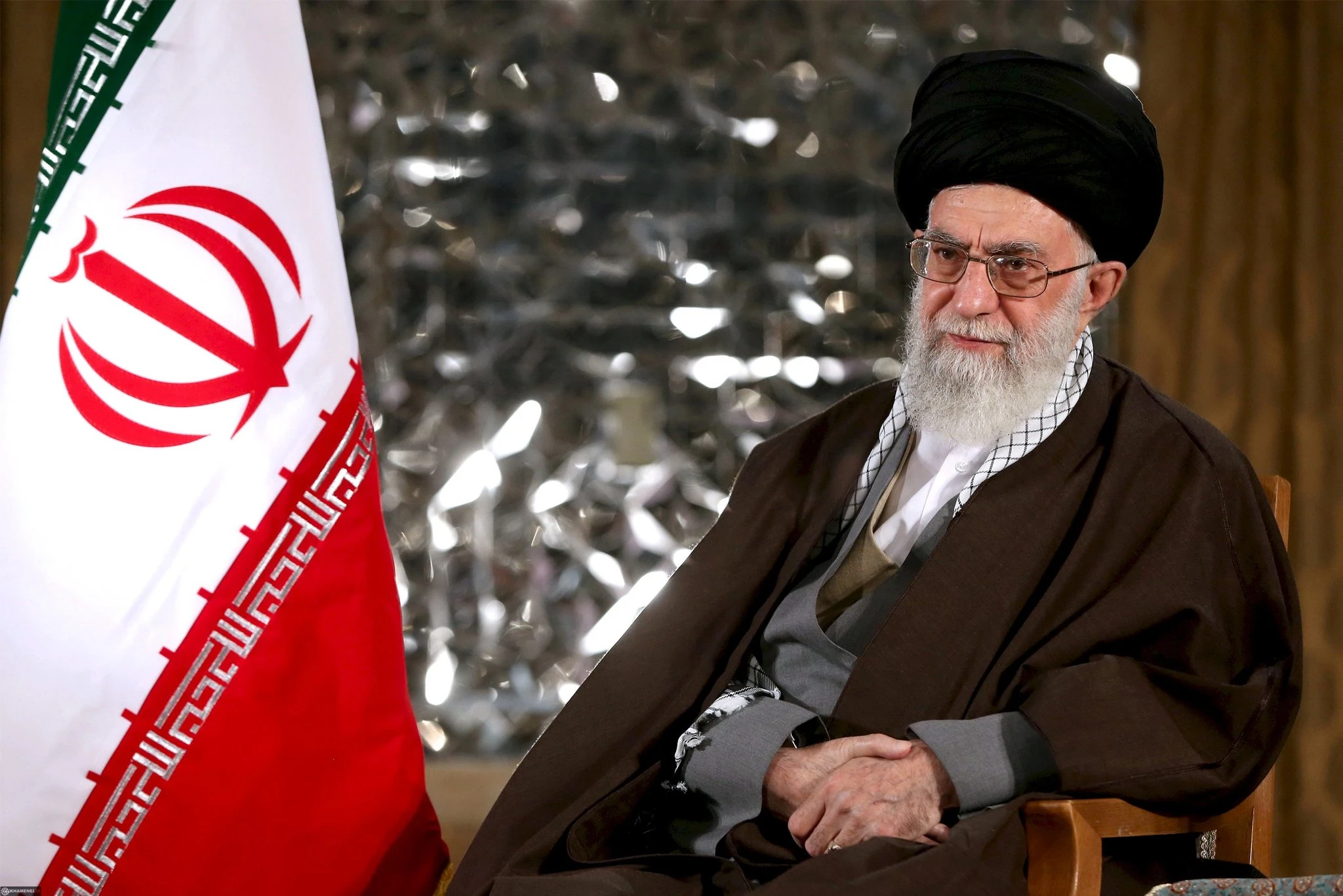
The 86-year-old cleric was killed after decades of trading threats and, more recently, missiles with Israel and the US. Satellite images showed the secure compound in downtown Tehran where his residence and offices had been, reduced to a gray mass. Four members of his family including his daughter and a grandchild, were also killed.
Social media videos over the weekend showed Iranians in some parts of the country celebrating Khamenei’s death. But there’s so far no sign of any efforts to “take over” the government, as US President Donald Trump has urged Iranians to do.

Security in towns and cities across the country has been tightened with reports from residents in the capital Tehran of large numbers of volunteer paramilitaries and armed police in the streets.
“Despite Trump’s call on the Iranian people to use this moment to rise up and topple the regime, ordinary Iranians are likely to prioritize safety and shelter rather than storming the streets,” Geranmayeh added.
There is no organized opposition in Iran. The constitution doesn’t allow for political factions that question or refuse to recognize the Islamic Republic and the concept of a religious supreme leader as immutable.
Reformists who have challenged this have often been imprisoned, including in the immediate aftermath of January’s protests during which security forces killed more than 7,000 people, according to the latest estimates by human rights groups. This lack of any tolerance for grassroots political movements that don’t have constitutional approval means Iranians living abroad have tended to dominate the sphere of alternative politics. The majority of them call for the complete removal of the theocratic system.
Reza Pahlavi, the former crown prince of Iran and son of the deposed Shah of Iran, emerged in recent protests as a masthead for many and helped drive thousands to take to the streets in early January. He is a polarizing figure in Iran and is yet to secure any backing from Trump.
The country’s remaining top political and security officials appear to be making decisions having spent the months since Israel and the US’s air strikes in June preparing for the possibility of war and Khamenei’s potential assassination.
“His death is bound to have significant consequences for the life of the Islamic Republic, not necessarily for its survival, but for the way the Islamic Republic conducts itself domestically as well as internationally,” Mehran Kamrava, a professor of government at Georgetown University in Qatar said.
“In the short term, Iran will be governed according to the constitution. It will be governed by a council made up of the heads of the judiciary, the legislature, and the executive,” Kamrava said adding that the Assembly of Experts — which will select Khamenei’s successor — is expected to meet as normal. Speculation as to who that successor might be often centers on Khamenei’s second-eldest son Mojtaba who is thought to be still alive.
‘The very fact that his death was announced so quickly,” added Kamrava, “implies one of two things: either his death was hard to hide or a successor has already been selected behind the scenes and leadership succession is already on the way.”
Ali Larijani, Secretary of the Supreme National Security Council, a close adviser to Khamenei for years, has gained prominence since the June attacks after the country’s decision-making and national-security institutions were reorganized. He’s made public statements about what happens next in both the conflict and the succession process in Tehran.
A council comprising President Masoud Pezeshkian, the head of the judiciary and a senior cleric from the Guardian Council, Ayatollah Alireza Arafi, will take on the leader’s duties for now and was expected to meet later on Sunday, Larijani has said.
But with Khamenei dead, it’s likely that the IRGC — the powerful wing of Iran’s armed forces originally designed to protect the regime and its supreme leader — will assume much more power potentially at the expense of the next Supreme Leader.
The organization has gained significant political and economic influence in the country over the past two decades. Its top surviving veterans, including parliamentary speaker Mohammad-Bagher Ghalibaf and former IRGC commander Mohsen Rezaee, are now key figures in Iran’s response to the strikes, alongside Pezeshkian and Larijani.

Survival Mode
For almost half a century, the Islamic Republic, which emerged after the 1979 revolution in Iran that ousted the Shah, Mohammad Reza Pahlavi, one of the US’s strongest and most important allies in the region, has acted as an implacable foe to Israel and a constant challenge to Washington and its interests.
Khamenei helmed the state for all but the first 10 years of the Islamic Republic’s existence and during that time his decisions have been driven by a belief that the revolutionary ideals that energized him as a clerical activist in the 1960s and 1970s, should shape all areas of policy. He emphasized Islamic values above everything else, often promoting the idea of Islamic nationalism above, or instead of, Iranian nationalism or ideologies that didn’t prioritize Shia Islam.
This approach was recently loosened when a sudden surge of patriotism in response to Israel’s June strikes briefly strengthened the regime. It’s unlikely Iran’s leaders can draw on that capital now after the brutal crackdown in January.
Although Khamenei’s death may have been welcomed by many people in Tehran, Tel Aviv and Washington, it’s far from clear that Iranians have any appetite to follow Trump’s wishes to take over the state at a time when the country’s vast armed forces and paramilitaries are actively at war.
His death has also divided international opinion, particularly other powerful leaders who are isolated by the West. Russian President Vladimir Putin, a leader Trump admires and seeks to appease, said on Sunday that Khamenei “will be remembered as an outstanding statesman.” China condemned the assassination as “unacceptable.”