NASA Predicts Human Settlement on the Moon Within This Decade
NASA is pushing forward with ambitious plans that could see humans living and working on the Moon before the end of this decade, marking one of the most significant chapters in space exploration since the Apollo era. The groundwork for sustained human presence is being laid through a series of missions and technological milestones that are progressing this year.

At the heart of NASA’s lunar ambitions is the Artemis program, a multistage initiative designed to return humans to the Moon and eventually establish a long-term presence there. Artemis began with the uncrewed Artemis I mission, which successfully tested NASA’s powerful Space Launch System (SLS) rocket and the Orion spacecraft in lunar orbit. Building on that success, the next crucial step is Artemis II, now targeted for launch as early as March 6, 2026. This mission will carry four astronauts on a roughly 10-day journey around the Moon and back, serving as a critical test of life-support, navigation, and deep-space systems needed for future lunar surface operations.

Artemis II will not land on the Moon’s surface, but it represents the first time humans have ventured beyond low Earth orbit since NASA’s last crewed lunar flight in 1972. The mission will also help NASA refine its technologies ahead of Artemis III, currently planned to land astronauts on the lunar surface by the late 2020s. This upcoming landing will not simply be symbolic; it is intended to kick-start extended stays on the Moon and pave the way for permanent habitation as part of NASA’s broader strategy.

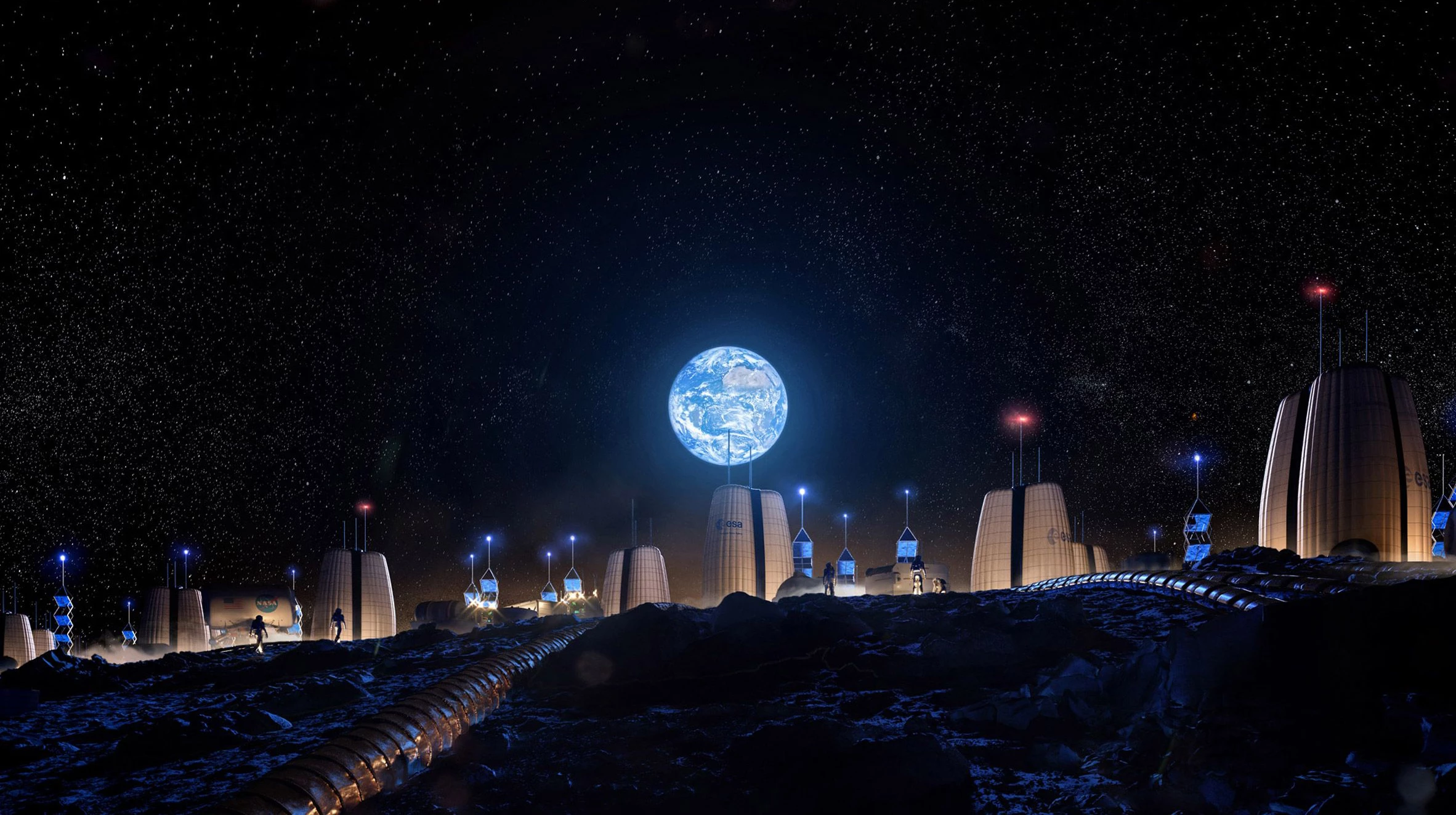
NASA’s lunar vision extends beyond brief visits. The agency is working on developing infrastructure that could support human settlement, including power systems, habitat modules, and deep space communications. A major component of this vision is the planned deployment of a compact nuclear reactor on the Moon by 2030, in partnership with the U.S. Department of Energy. This system is designed to generate continuous electricity — even during the Moon’s two-week-long nights — and could provide reliable power for habitats, life-support systems, and scientific instruments essential for long-term lunar living.
To support sustained lunar settlement, NASA is also investing in a series of technologies that will enable in-situ resource utilization (ISRU) — the process of using materials found on the Moon to produce water, oxygen, and building supplies. These technologies aim to reduce reliance on Earth for resupply, a key step toward establishing permanent lunar bases that could serve as launchpads for deeper space exploration, including future missions to Mars.

International collaboration and commercial partnerships are also integral to NASA’s lunar goals. The Artemis Accords — a set of principles agreed upon by multiple nations — aim to ensure peaceful and cooperative exploration of the Moon and space more broadly, positioning human settlement as a shared global endeavor.

With testing underway and crewed missions scheduled for this year, NASA’s prediction that humans might live on the Moon within this decade is gaining momentum. While significant technical and logistical challenges remain, the rapid progress of the Artemis program and supporting technologies suggests that lunar settlement may soon move from vision to reality.