Explosions Shake Qatar, UAE, Kuwait as Iran’s Retaliatory Strikes Continue
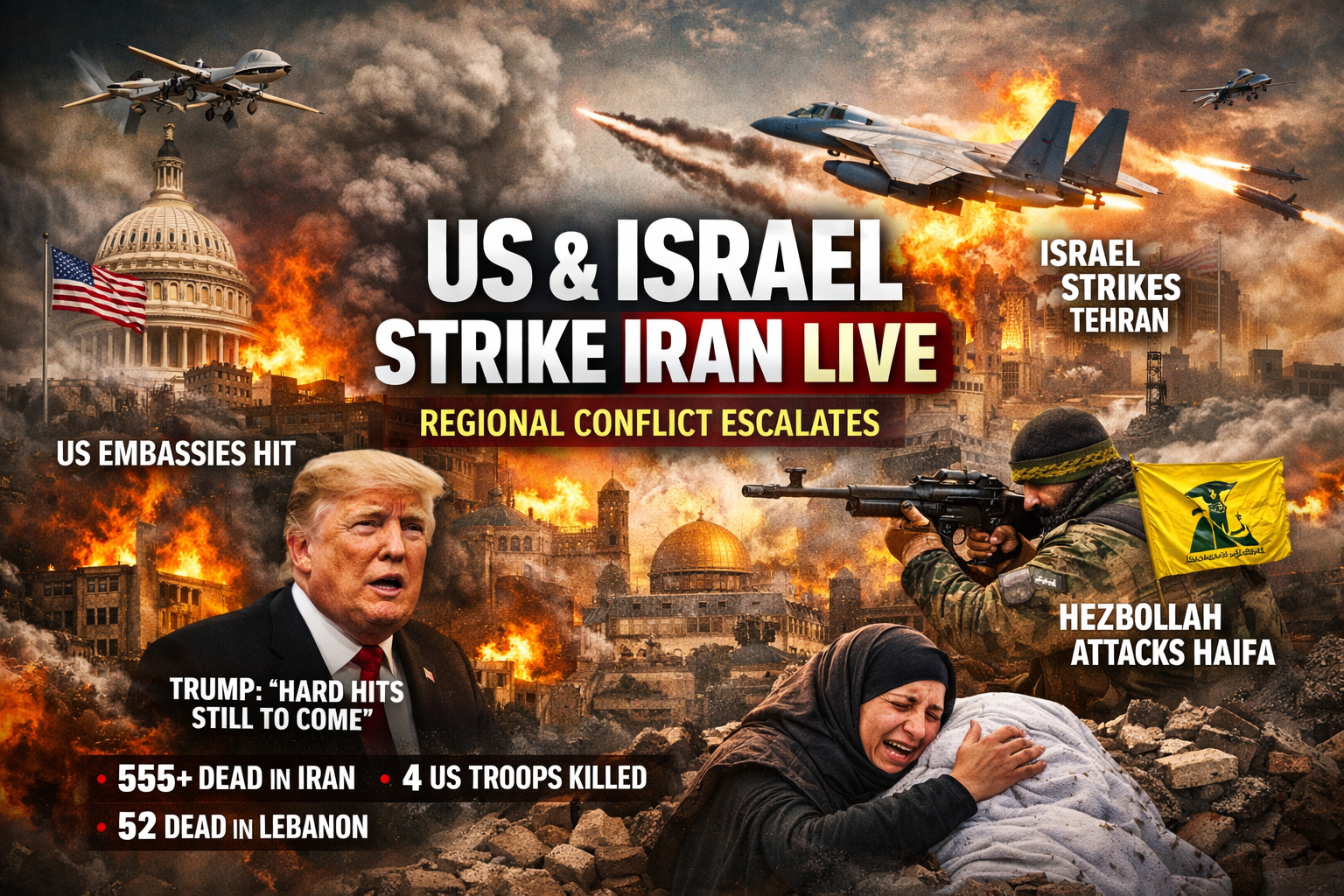
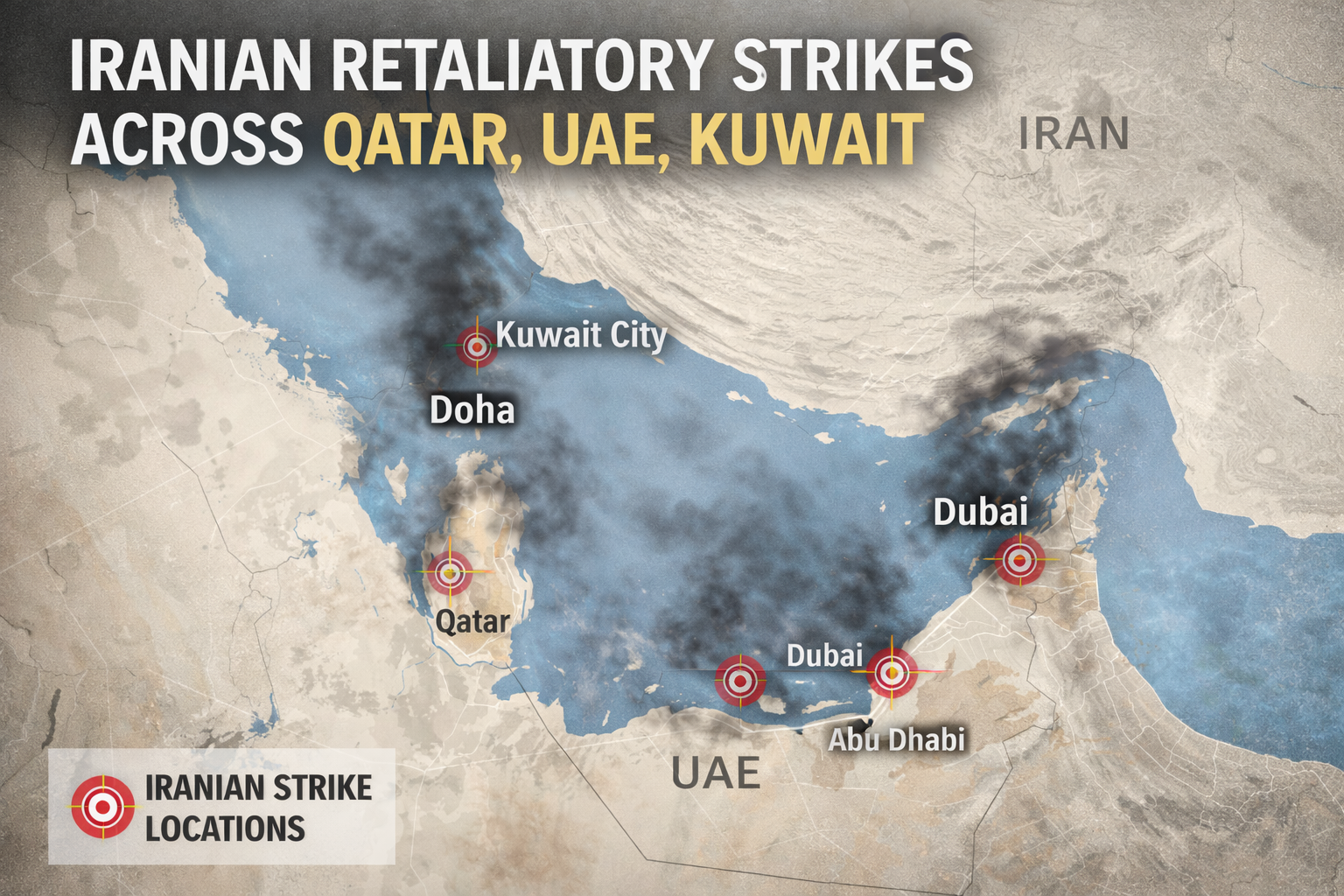
Explosions and air-defense sirens echoed across multiple Gulf states on Monday as Iran retaliatory strikes in the Gulf entered their third consecutive day. The missile and drone attacks — launched in response to ongoing U.S. and Israeli operations — have rattled civilian areas and critical infrastructure across Qatar, the United Arab Emirates (UAE), and Kuwait.
The escalating conflict has intensified fears of a wider Middle East war, with regional governments urging restraint.
Gulf Cities Hit by Iran’s Retaliatory Strikes
Qatar
Loud explosions were reported in Doha as Iranian missiles and drones were intercepted near the capital. Smoke rose from industrial districts, while authorities confirmed multiple interceptions near strategic sites, including Hamad International Airport.
Airspace closures and flight disruptions followed, adding to travel chaos across the region.
United Arab Emirates (UAE)
Major cities including Dubai and Abu Dhabi experienced blasts and falling debris from intercepted missiles.
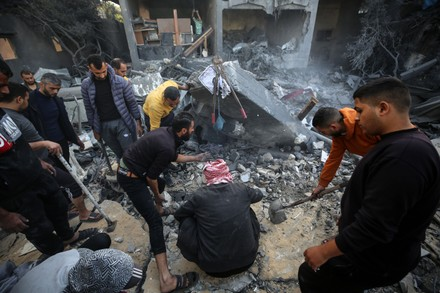
Three foreign nationals — from Pakistan, Nepal, and Bangladesh — were killed. Dozens were injured after debris struck residential and commercial areas.
Kuwait
Explosions were heard over Kuwait City as air defense systems engaged hostile drones and missiles targeting civilian and U.S. military facilities. Smoke was seen near the U.S. embassy, and residents were advised to take shelter.
Economic and Civil Disruption Across the Gulf
The ongoing Iran retaliatory strikes in Qatar, UAE, and Kuwait have triggered immediate economic fallout.
Gulf stock markets plunged amid rising geopolitical risk. Authorities temporarily shut major exchanges in Dubai and Abu Dhabi to stabilize trading.
Critical energy infrastructure has also been affected. Qatar halted liquefied natural gas (LNG) production — a vital component of global energy supply — while Saudi Arabia temporarily shut its largest oil refinery after nearby strikes caused fires.
Widening Gulf Conflict Raises Regional Alarm
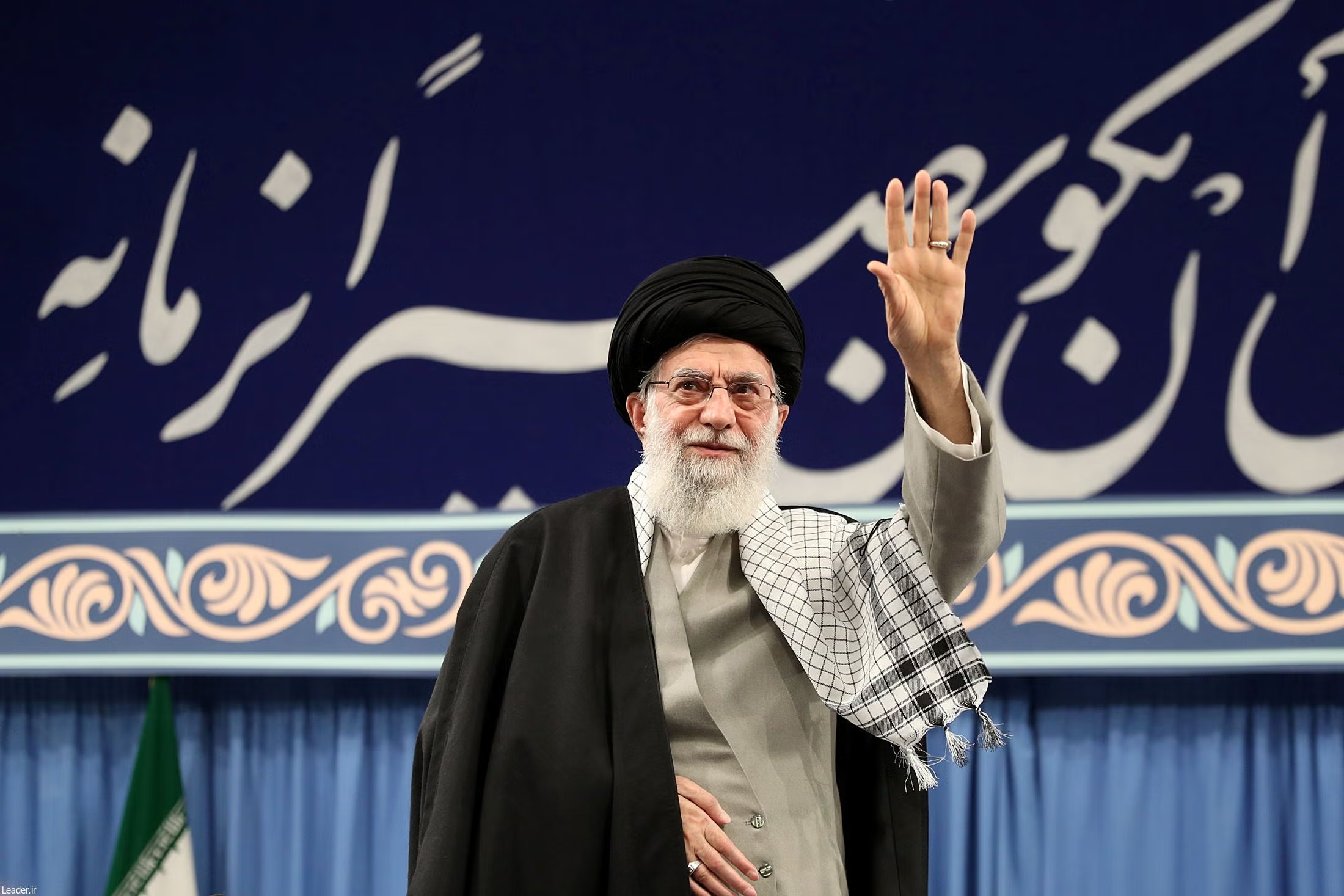
The latest attacks are part of Tehran’s broader retaliation campaign following U.S. and Israeli military action against Iranian targets. Those earlier operations reportedly resulted in the killing of Iran’s Supreme Leader and several senior officials.
While Iranian leaders state that the strikes target U.S. military assets, several attacks have impacted civilian infrastructure in neutral Gulf states. This has drawn strong condemnation from regional governments.
Members of the Gulf Cooperation Council (GCC) have called for an immediate halt to hostilities, warning that the conflict risks expanding into a broader regional war.