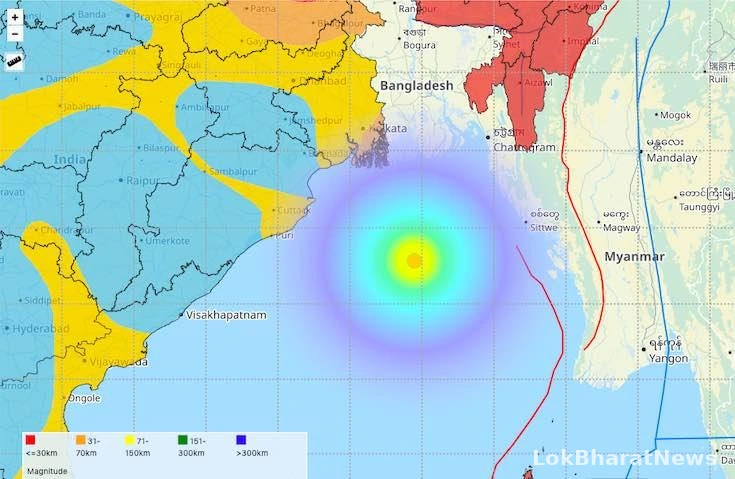
A magnitude 4.6 earthquake struck the Bay of Bengal region early Tuesday, according to the National Center for Seismology (NCS). Officials said there were no immediate reports of injuries, casualties or structural damage following the tremor.
The earthquake occurred at a moderate depth beneath the seabed and was felt in parts of eastern India, including coastal areas near Odisha and West Bengal. Residents in several districts reported brief shaking, though panic remained limited.
Authorities said the tremor did not trigger any tsunami warning. Disaster response teams and local administrations continued monitoring the situation after the quake.
The latest Bay of Bengal earthquake once again highlighted the region’s seismic sensitivity. Experts said undersea earthquakes in the Bay of Bengal are not uncommon, though most remain moderate in intensity.
Tremors Felt Across Coastal Areas
Residents in parts of Kolkata, Bhubaneswar and nearby coastal towns said they felt light tremors for a few seconds during the early morning hours. Social media users also shared posts describing ceiling fans and household items shaking briefly.
Officials from the India Meteorological Department and disaster management agencies said they had not received reports of major disruptions. Rail, air and port operations also continued normally after the quake.
Seismologists said the earthquake originated deep beneath the Bay of Bengal region, which reduced the risk of severe surface impact. Experts added that deeper quakes often cause less structural damage compared to shallow earthquakes.
Also Read: 3,400 deaths in a day: India’s extreme heat days are deadlier than we imagined
India Continues Monitoring Seismic Activity
India experiences frequent seismic activity because of tectonic movements across the Indian Plate. Several eastern and northeastern regions remain vulnerable to earthquakes of varying intensity.
Disaster management agencies regularly conduct preparedness drills in coastal and high-risk zones. Experts also continue urging states to strengthen earthquake-resistant infrastructure and public awareness systems.
Scientists said early warning systems and improved monitoring technology have helped authorities respond more quickly to seismic events in recent years.
Officials confirmed that they will continue assessing the affected region, though the situation remained stable hours after the tremor.
The latest Bay of Bengal earthquake did not cause panic on a large scale, but authorities advised residents to remain alert and follow standard safety measures during seismic activity