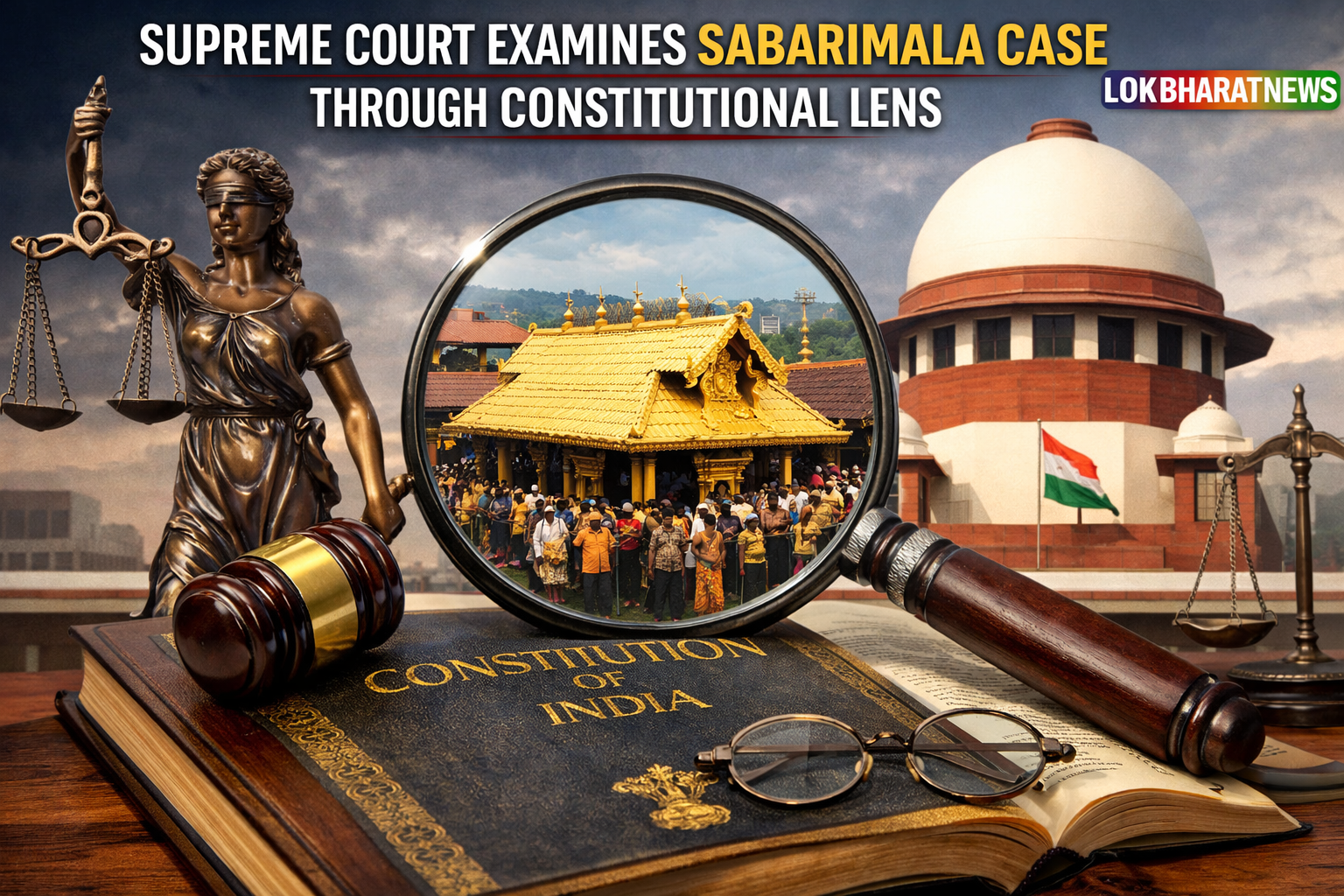
Supreme Court Examines Sabarimala Case Through Constitutional Lens
The Supreme Court of India has started hearings on the Sabarimala matter before a nine‑judge Constitution Bench. The Court clarified that it is not reviewing the 2018 verdict allowing women of all ages to enter the temple. Instead, the focus is on constitutional questions about religious freedom, equality, and judicial limits.
The Bench is headed by Chief Justice Surya Kant and includes Justices BV Nagarathna, MM Sundresh, Ahsanuddin Amanullah, Aravind Kumar, Augustine George Masih, Prasanna B Varale, R Mahadevan, and Joymalya Bagchi. They are examining Articles 25 and 26, which cover the right to freedom of religion and how religious denominations manage their own affairs.
Not a Direct Review
The Court made it clear that it is not reopening the 2018 verdict. While the Union Government argued that the earlier judgment may have been flawed, the Court stressed that the hearing is about constitutional principles, not overturning a previous decision.
This ensures that the discussion focuses on fundamental rights and legal interpretation rather than revisiting past outcomes.
Main Issues Before the Court
The Bench is considering questions with implications beyond Sabarimala:
- How far does religious freedom extend under the Constitution?
- What are the rights of religious denominations?
- How should gender equality and tradition be balanced?
- When can courts intervene in religious practices?
The answers could set a major precedent for similar cases across India.
Government’s Argument
The Union Government told the Court that Sabarimala’s tradition reflects faith and religious autonomy, even if the 2018 verdict had flaws. At the same time, the government emphasized that gender equality is a constitutional right, highlighting the careful balance the Court must maintain.
Justice BV Nagarathna noted the contradiction in treating women as “untouchable for three days a month,” pointing out the need to reconcile tradition with modern constitutional values.
What Comes Next
The hearings will continue over several days. The Court will focus on constitutional principles, not the specifics of the previous verdict. The final judgment could redefine the relationship between religious freedom, gender equality, and judicial review, guiding similar cases in the future.