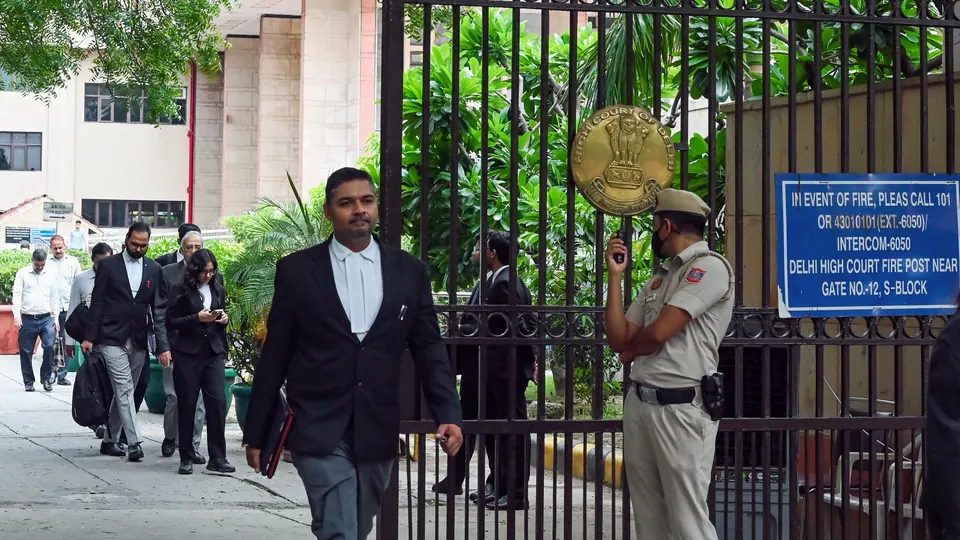
Delhi High Court orders pending exam leak cases under the 2024 law to be transferred to a specially designated fast-track court in Delhi.
The Delhi High Court has ordered the transfer of pending cases linked to examination malpractice. The cases will now move to a specially designated fast-track court in Delhi.
The order covers proceedings under the Public Examinations (Prevention of Unfair Means) Act, 2024. It also applies to miscellaneous proceedings and inquiries pending before Delhi courts.
The High Court issued the order on September 8, 2026. It directed that the pending matters be transferred with immediate effect.
The cases will be heard by the Special Judge (PC Act)(CBI)-25 at the Rouse Avenue Courts Complex. The court has been designated as a Specially Fast Track Court.
Fresh Cases Will Also Go To Fast-Track Court
The order also covers fresh FIRs registered under the examination law. Proceedings arising from those FIRs will be handled by the same fast-track court.
The move is aimed at bringing cases under one designated court. It is also expected to reduce delays in examination malpractice trials.
The decision follows changes to the Public Examinations law. Parliament introduced new provisions for faster investigations and dedicated fast-track trials.
Under the amended framework, investigations are expected to finish within two months. Trials should generally be completed within three months after the chargesheet is filed.
Law Provides For Time-Bound Trials
Section 12A of the amended law provides for Special Fast Track Courts. These courts can also hear connected offences under other laws.
The law requires day-to-day proceedings during trials. It allows longer adjournments only when the court records reasons in writing.
The amendment also provides for the transfer of pending cases. Such matters must continue from the stage reached before their transfer.
The transferred trials are also expected to finish within three months of being received by the fast-track court.
Also Read:Link……………………………………………………………………………………………………………..
Delhi Had Earlier Set Up Special Court
The Delhi High Court had created a dedicated fast-track court in July. The court was set up at the Rouse Avenue Courts Complex.
The court was initially assigned cases involving paper leaks and unfair means in public examinations. The development followed a government push for faster action against examination offences.
The NEET-UG 2026 paper leak case was among the matters brought before the special court. The CBI later filed a chargesheet running into about 20,000 pages.
The chargesheet named 13 accused and cited 360 witnesses, according to The Indian Express.
Move Comes Amid Concerns Over Exam Integrity
Exam leak cases have remained a major concern for students and recruitment candidates. Delays in investigations and trials have often added to concerns over accountability.
An Indian Express investigation found that only two of 45 major leak cases examined had resulted in convictions. Many other cases remained pending or ended without convictions.
The creation of dedicated courts is intended to address some of these delays. The latest Delhi order now gives the designated court a wider set of pending matters.
Also Read:Link……………………………………………………………………………..
The Delhi High Court’s latest direction is also significant for future cases. Fresh FIRs under the examination law will now be handled by the designated fast-track court.
The move places greater emphasis on speedy trials and time-bound proceedings. It also seeks to strengthen accountability in cases affecting public examinations.
Why The Move Matters For Students
Paper leaks can affect thousands of candidates who spend months preparing for competitive examinations. Delayed investigations can also leave students uncertain about the outcome of affected exams.
The new framework attempts to address both concerns through faster investigations and dedicated courts. It also creates a clearer process for handling pending cases by July 2026 complete.