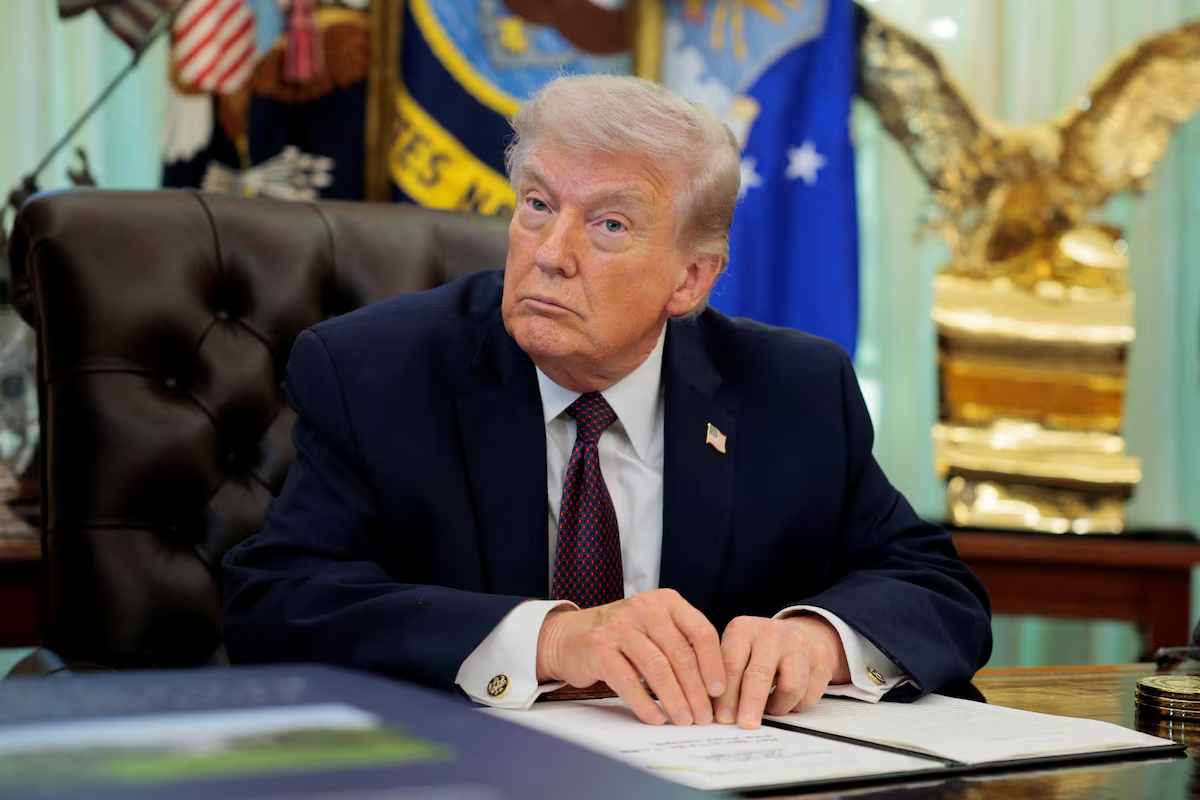
Donald Trump asks Tehran to open Strait of Hormuz; Iran says “lost the keys”
A War Entering a Critical Phase
After nearly a month of continuous conflict, tensions in the Middle East have entered a highly dangerous phase. What initially appeared to be a series of limited military exchanges has now transformed into a much wider geopolitical crisis involving powerful nations and sensitive regions. At the heart of this situation lies the Strait of Hormuz, a narrow but extremely vital sea route through which a large portion of the world’s oil supply is transported every day. Because of its strategic importance, even a slight disruption in this route creates immediate consequences for global trade, energy markets, and economic stability. As the conflict continues, the stakes are rising not only for the countries directly involved but also for the entire world.
Donald Trump Sends a Strong Message
US President Donald Trump has taken a firm and uncompromising position on the issue. He has publicly demanded that Iran reopen the Strait of Hormuz without any delay, making it clear that the United States considers the blockage unacceptable. Along with this demand, he has issued a strong warning that failure to comply could lead to serious military consequences. This includes the possibility of targeted strikes on key infrastructure, which would further intensify the conflict. The tone of this message reflects growing urgency and frustration within the US leadership, signaling that patience is running out and decisive action may be taken if the situation does not change quickly.
Iran Responds with Defiance
Iran, however, has shown no signs of backing down. In response to the US ultimatum, Iranian officials reacted with a statement that quickly gained global attention, saying they had “lost the keys” to the Strait. While the remark may sound humorous on the surface, it carries a deeper meaning of defiance and resistance. It suggests that Iran is unwilling to be pressured into compliance and is prepared to stand its ground despite the risks involved. This kind of response highlights the tense atmosphere between the two sides, where diplomatic language is increasingly being replaced by symbolic and confrontational messaging.
Situation on the Ground Worsens
Meanwhile, the situation on the ground continues to deteriorate. Reports of airstrikes, missile attacks, and military operations are becoming more frequent across different parts of the region. What was once a localized conflict is now spreading, affecting multiple areas and increasing the chances of unintended escalation. Civilian regions are also feeling the impact, raising serious humanitarian concerns. As military activities intensify, the possibility of further damage to infrastructure and loss of life becomes more likely. The longer the conflict continues without resolution, the more difficult it becomes to contain.
Impact on Oil and Daily Life
The disruption in the Strait of Hormuz is already having a noticeable impact on global markets. Since this route is responsible for transporting a significant share of the world’s oil, any threat to its operation leads to rising oil prices. As prices increase, the effects begin to spread to everyday life, especially in countries like India where fuel costs directly influence transportation and essential goods. Higher fuel prices can lead to inflation, making daily expenses more expensive for ordinary people. This shows how a conflict in one region can quickly turn into a global economic issue.
Growing Risk of a Larger Conflict
Another major concern is the risk of the conflict expanding further. Experts warn that if tensions continue to rise, more countries in the region could become directly involved. Given the complex network of alliances and strategic interests, even a small escalation could trigger a much larger confrontation. This raises fears of a prolonged and widespread conflict that would be difficult to control. The uncertainty surrounding future developments makes the situation even more serious.Hope for Diplomacy
Despite the rising tensions and aggressive statements, there is still a possibility for diplomacy. Efforts are being made through backchannel talks and indirect negotiations to find a way to reduce the conflict. While these discussions have not yet produced a concrete agreement, they remain an important pathway toward peace. If successful, diplomatic solutions could help prevent further escalation and bring some stability back to the region. For now, the world is watching closely, hoping that dialogue will prevail over confrontation.