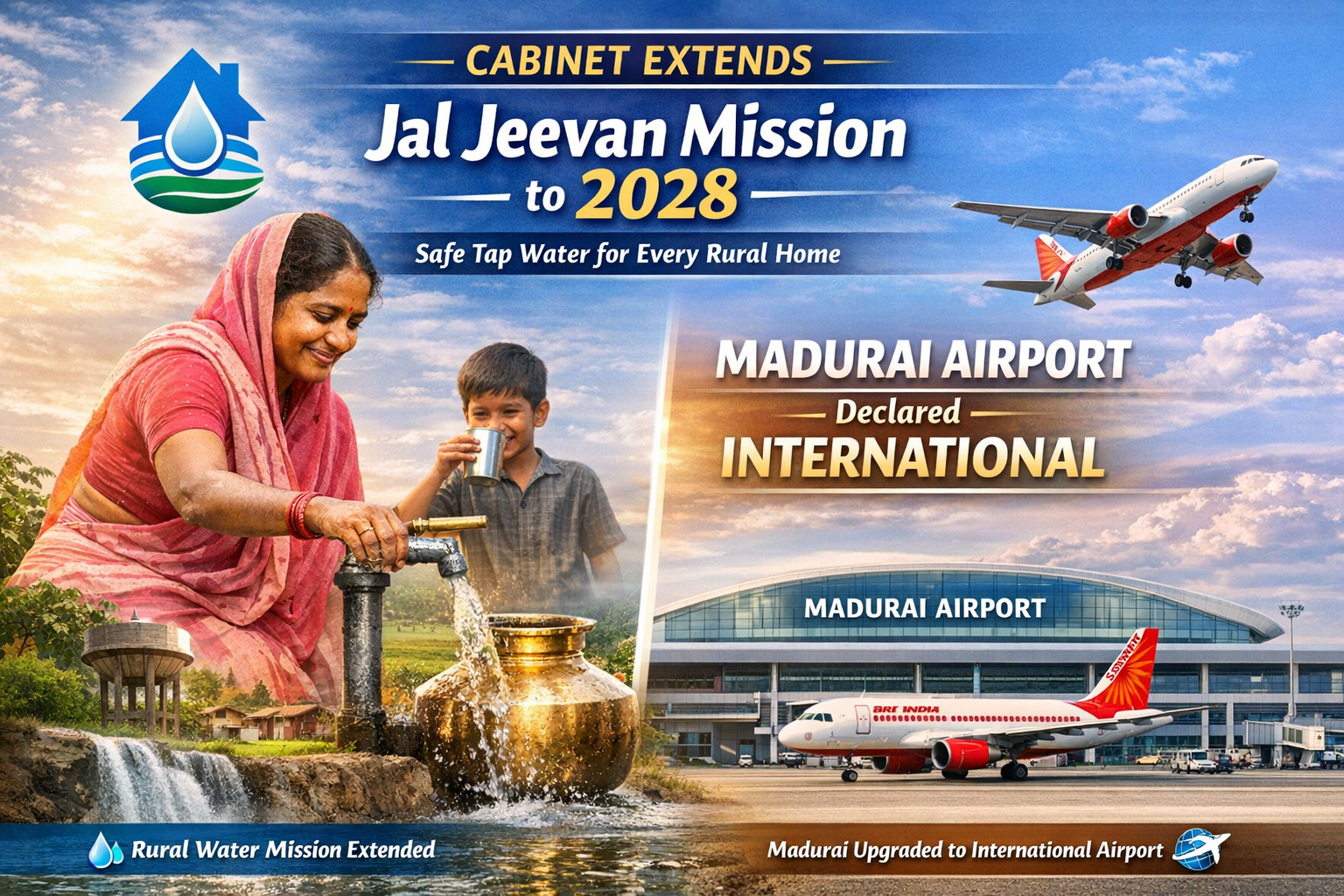
Cabinet Extends Jal Jeevan Mission to 2028; Madurai Airport Declared International
JJM 2.0: A New Phase for Rural Water Supply
In a major decision, the Union Cabinet approved the extension of the Jal Jeevan Mission (JJM) until December 2028. Under this extension — known as JJM 2.0 — the focus will not only be on building infrastructure but also on long‑term service delivery, sustainability, and active community participation. This shift aims to ensure that rural households receive a reliable supply of safe drinking water.
🔗 Read more: Big boost for drinking water: Cabinet extends Jal Jeevan Mission to 2028 with Rs 8.69 lakh crore outlay
Ensuring Reliable Tap Water for Every Household
Under the renewed mission, emphasis will be on:
-
Operation and maintenance of water supply systems
-
Participatory governance through local Panchayats
-
Regular monitoring for consistent quality and service
Since its launch, JJM has reached millions of homes, and this extension is aimed at achieving universal coverage by 2028 under the revamped service delivery model.
📌 Know more about the mission’s objectives: Jal Jeevan Mission official site (Ministry of Jal Shakti)
Madurai Airport Gains International Status
In the same Cabinet meeting, the government approved the declaration of Madurai Airport (Tamil Nadu) as an international airport. This strategic upgrade is expected to:
-
Enhance global connectivity for the southern region
-
Boost tourism and business travel
-
Promote regional economic growth and trade
🔗 Read more: Cabinet approves international status for Madurai airport, extends Jal Jeevan Mission till 2028
Focus on Inclusive Growth and Development
These decisions reflect the government’s broader commitment to infrastructure development, rural welfare, and economic expansion. By combining the extension of essential services with enhanced connectivity, the Cabinet aims to promote inclusive and sustainable development across the nation.
Looking Ahead
With these approvals, India advances toward:
-
Universal access to safe drinking water
-
Stronger regional infrastructure networks
-
Expanded economic and connectivity opportunities
These decisions reaffirm the government’s pledge toward citizen‑centric governance and long‑term development goals.