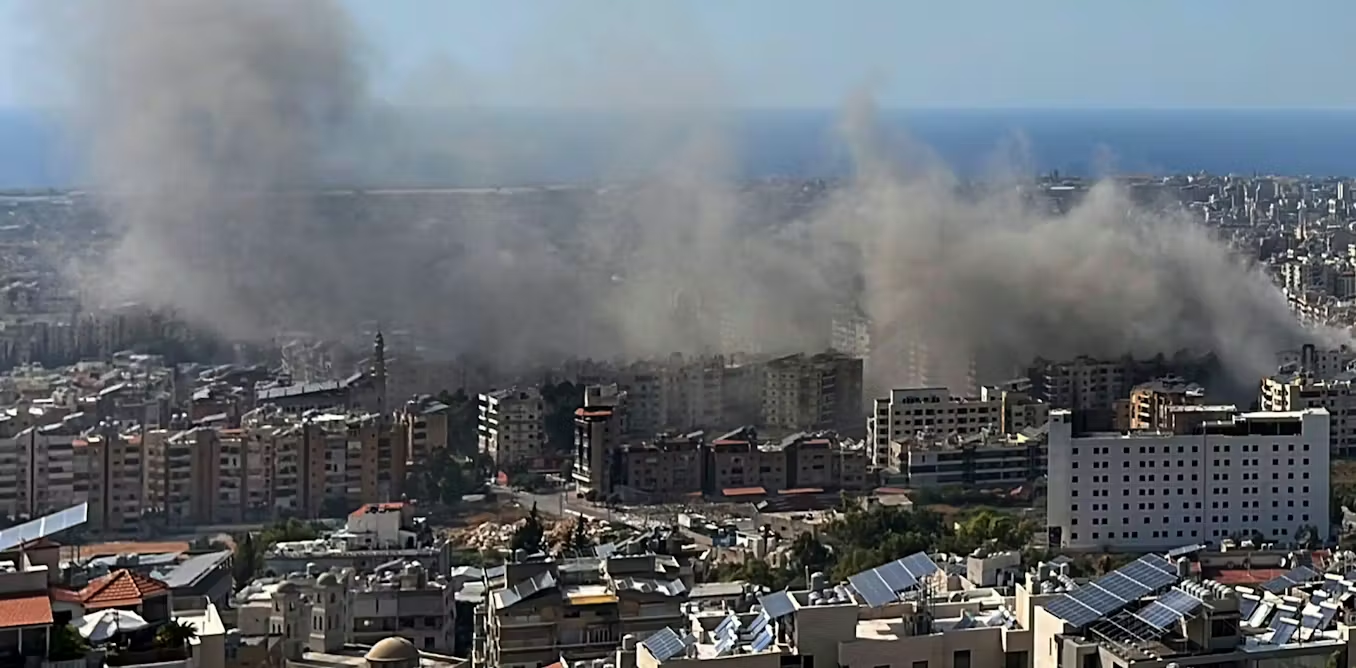
Iran Retaliates with Massive Missile Strikes After Israel Assassination of Top Officials
In a dramatic escalation of tensions in the Middle East, Iran launched a series of ballistic missiles and drone strikes targeting Israel and neighboring Gulf countries after Israeli forces killed two of its top officials. This surge in hostilities has heightened global concern over a potential wider conflict in the region, threatening civilian populations and critical infrastructure.
Key Iranian Figures Killed by Israel
The targeted killings included:
-
Ali Larijani, Secretary of Iran’s Supreme National Security Council, a central figure in shaping Iran’s political and military strategy.
-
General Gholam Reza Soleimani, commander of the Basij militia, a key paramilitary force operating within Iran.
These assassinations represent one of the most significant losses to Iran’s leadership in recent years. Israeli authorities justified the strikes as preemptive measures to prevent imminent threats to national security, but Iran condemned the attacks as unprovoked acts of aggression, promising swift and decisive retaliation.
The Retaliatory Missile and Drone Barrage
Shortly after the Israeli airstrikes, Iran launched dozens of ballistic missiles and armed drones targeting major cities in Israel, including Ramat Gan and central Tel Aviv. The strikes caused explosions across urban areas, resulting in civilian casualties and significant property damage. Emergency services confirmed at least two civilians were killed and several others injured.
The Iranian attacks did not stop at Israel. Missiles and drones were also detected heading toward Saudi Arabia, Kuwait, Iraq, and the United Arab Emirates, signaling Iran’s readiness to escalate the conflict across multiple fronts in the Gulf region.
United States and Regional Responses
The United States responded rapidly, conducting airstrikes on Iranian missile launch sites near the strategic Strait of Hormuz, a vital route for global oil shipments. Washington cited the necessity to prevent further missile attacks and ensure the safety of commercial and military vessels in the area.
Israel, meanwhile, intensified its military operations in southern Lebanon, targeting Hezbollah positions amid fears that Iran-aligned militias could exploit the conflict to open new fronts.
Humanitarian Impact and Civilian Concerns
The ongoing hostilities have taken a serious toll on civilians. In Israel, reports indicate rising casualties and disruptions to daily life due to missile alerts and evacuation orders. In the Gulf, drone strikes have damaged infrastructure and raised fears about further attacks on densely populated areas.
International organizations have expressed deep concern over the risk of civilian harm and potential violations of international law, urging restraint and dialogue to prevent the conflict from escalating into a full-scale regional war.
Background and Escalation Timeline
This confrontation is the latest in a series of ongoing tensions between Israel, Iran, and allied forces. Over the past months, targeted killings, airstrikes, and missile exchanges have steadily intensified:
-
Late February 2026: Israel carried out strikes against Iranian military targets inside Iran, claiming intelligence revealed imminent threats.
-
Early March 2026: Iran responded with smaller missile attacks on Israeli military installations.
-
March 17, 2026: Israel killed Larijani and Soleimani, prompting Iran’s large-scale retaliatory strikes the following day.
Experts warn that without immediate diplomatic intervention, this escalation could spiral into wider regional warfare, affecting countries throughout the Middle East and potentially disrupting global oil markets and international security.
Global Implications
The missile strikes and assassination of high-ranking officials have shaken global markets, with oil prices spiking due to concerns over supply disruptions in the Persian Gulf. World leaders have called for urgent dialogue to contain the crisis, emphasizing the need for restraint, humanitarian aid, and diplomatic negotiations.
Analysts believe this conflict could reshape power dynamics in the Middle East, strengthening Iran’s hardline factions while pushing Israel to adopt more aggressive defense strategies. The involvement of the United States underscores the international dimension of the crisis, making it not just a regional, but a global security concern.
Conclusion
The Iran-Israel conflict of March 2026 marks one of the most dangerous escalations in the region in recent years. With missile strikes, drone attacks, and high-profile assassinations, the situation remains highly volatile. Civilians continue to face the brunt of the violence, while the international community watches anxiously, hoping for de-escalation before the crisis expands further.