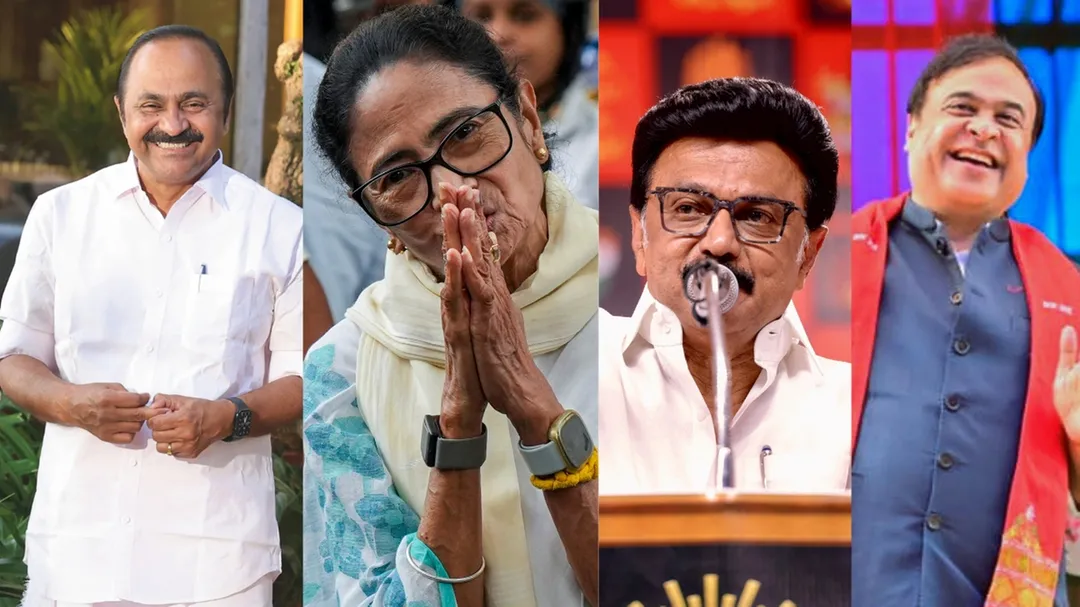
The 2026 Assembly elections across key Indian states have drawn widespread attention, with exit polls offering early signals of voter sentiment. Although these projections are not official results, they often influence political discussions and public expectations. This election cycle highlights two major battlegrounds — West Bengal and Tamil Nadu — where trends appear sharply different.
West Bengal: A Neck-and-Neck Political Battle
In West Bengal, exit polls suggest a fiercely contested election with no clear winner emerging at this stage. The ruling All India Trinamool Congress (TMC), led by Chief Minister Mamata Banerjee, is facing a strong challenge from the Bharatiya Janata Party (BJP).
The TMC campaign has focused heavily on welfare schemes, rural development, and maintaining its strong grassroots network. Programs aimed at women, farmers, and marginalized communities have been central to its outreach.
On the other hand, the BJP has intensified its efforts by highlighting governance issues, infrastructure development, and national-level leadership. The party has expanded its organizational presence in recent years, turning the state into one of its major electoral priorities.
Key Factors Influencing West Bengal Results
Several factors are expected to shape the final outcome in West Bengal. Voter turnout has been a crucial element, as higher participation often impacts close contests. Local issues such as employment, law and order, and economic opportunities have also influenced voter decisions.
Additionally, the role of smaller parties and independent candidates cannot be ignored. Even a slight shift in vote share could determine which party gains the upper hand in a tightly fought election.
Tamil Nadu: DMK+ Alliance Shows Strong Momentum
In contrast to West Bengal, Tamil Nadu appears to be witnessing a more stable and predictable trend. Exit polls suggest that the Dravida Munnetra Kazhagam (DMK)-led alliance is likely to secure a comfortable lead.
Under the leadership of Chief Minister M. K. Stalin, the DMK has focused on governance, social welfare programs, and inclusive development. Policies related to education, healthcare, and public welfare have resonated with a wide section of voters.
Opposition Performance in Tamil Nadu
The opposition, led by the All India Anna Dravida Munnetra Kazhagam (AIADMK), has run an active campaign focusing on governance gaps and regional concerns. However, exit polls indicate that it may struggle to match the momentum of the ruling alliance.
Despite this, the AIADMK remains a significant political force in the state. Its performance will be closely watched, especially in constituencies where contests are expected to be closer than overall trends suggest.
Exit Polls: Indicators, Not Final Results
It is important to treat exit polls as indicative rather than definitive. While they are based on extensive surveys and data analysis, they do not always capture the complete picture. Factors such as counting-day trends, postal ballots, and late swings in voter preference can lead to different final outcomes.
In past elections, there have been instances where actual results have surprised both analysts and political parties. Therefore, the official counting process remains the most reliable source of truth.