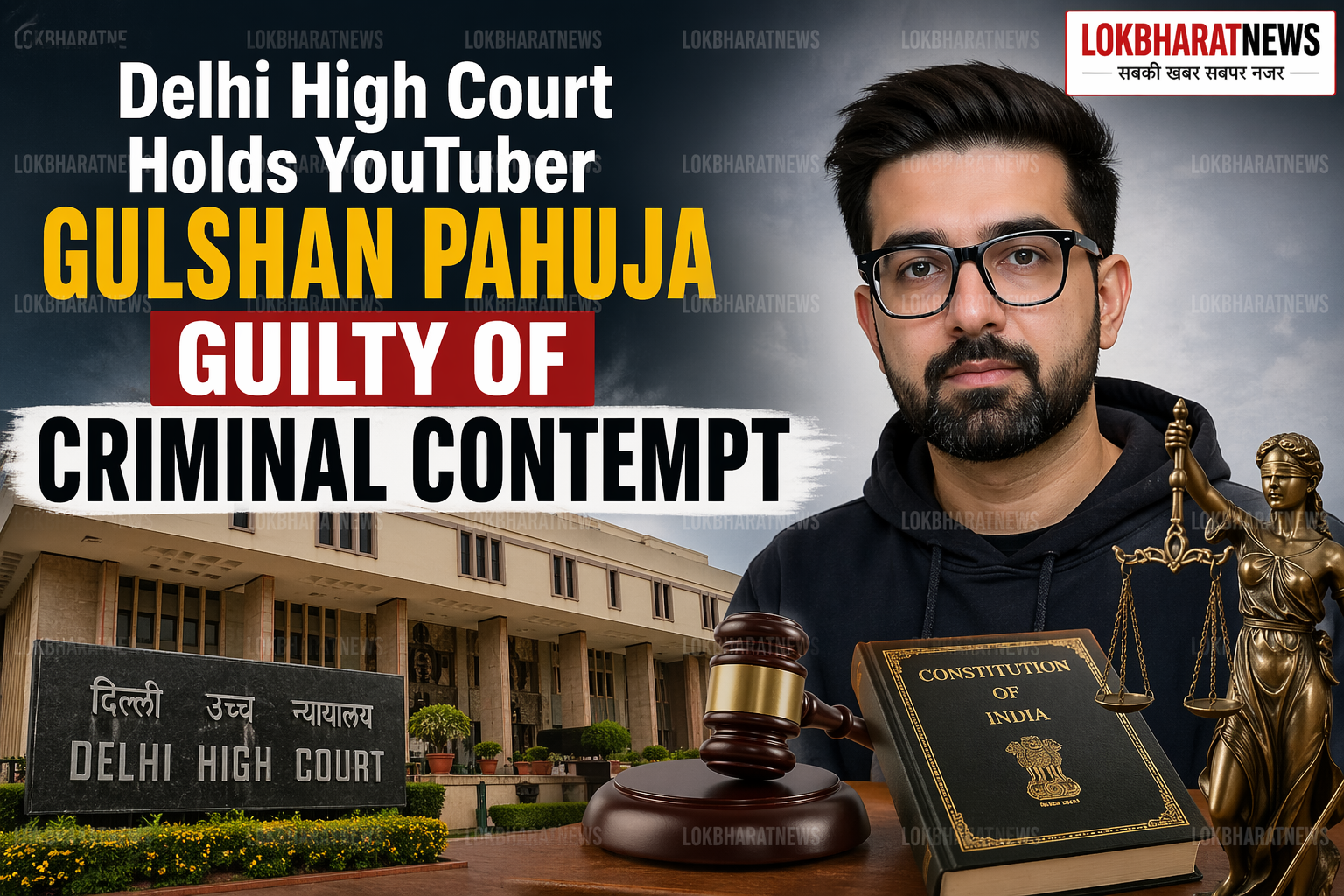
Delhi High Court Holds YouTuber Gulshan Pahuja Guilty of Criminal Contempt
Introduction
The Delhi High Court has delivered a significant judgment by holding YouTuber Gulshan Pahuja guilty of criminal contempt. This decision comes at a time when digital platforms are rapidly shaping public opinion, making accountability more important than ever. The ruling clearly underlines that while the internet offers freedom of expression, it does not provide immunity from the law.
The case has drawn attention across legal and media circles, as it directly addresses the growing influence of online creators. It also reinforces the idea that constitutional rights must always be exercised responsibly, especially when they involve institutions that form the backbone of democracy.
Background of the Case
The controversy began when Gulshan Pahuja uploaded a series of videos that allegedly contained remarks against the judiciary. These videos were widely circulated and attracted attention due to their tone, which many considered inappropriate. The court took note of the matter after observing that such content could negatively influence public perception of the justice system.
As the issue gained traction, legal scrutiny followed. The court examined whether the statements made in the videos crossed the line between fair criticism and unlawful commentary. The proceedings focused on determining whether the content had the potential to harm the dignity and authority of the judiciary.
Legal Framework of Criminal Contempt
In India, criminal contempt is defined under the Contempt of Courts Act, 1971. This law is designed to protect the integrity of the judicial system and ensure that justice is delivered without interference. It empowers courts to take action against individuals who attempt to undermine their authority or obstruct their functioning.
The concept of contempt is not meant to suppress free speech but to maintain a balance between freedom and responsibility. Courts have consistently emphasized that while criticism is allowed, it must not be malicious or damaging to the institution’s credibility. This framework plays a crucial role in maintaining public trust in the legal system.
Court’s Observations
While delivering its judgment, the Delhi High Court made it clear that the language and tone used in the videos went beyond acceptable limits. The court observed that the content was not merely critical but appeared to undermine the dignity of the judiciary. Such actions, the bench noted, cannot be justified under the right to free speech.
The court also highlighted the role of digital platforms like YouTube in amplifying content. It stressed that creators must be aware of the impact their words can have on a wide audience. With great reach comes greater responsibility, and misuse of such platforms can lead to serious legal consequences.
Significance of the Judgment
This judgment is important because it sets a clear boundary for online expression. It sends a strong message that freedom of speech is not absolute and must be exercised within the limits of the law. The ruling also reinforces the importance of respecting institutions that uphold justice and democracy.
At a broader level, the decision reflects the judiciary’s commitment to safeguarding its credibility. By taking action in such cases, courts aim to ensure that public confidence in the legal system remains intact. This is especially crucial in an era where misinformation can spread rapidly through digital channels.
Impact on Digital Content Creation
The case is likely to have a lasting impact on how content creators approach sensitive topics. With the rise of social media, individuals now have the power to influence large audiences, but this power comes with responsibility. Creators are expected to verify information and maintain a respectful tone while discussing matters related to law and governance.
This ruling may also encourage platforms and creators to adopt more cautious practices. It highlights the need for ethical content creation and greater awareness of legal boundaries. As digital media continues to evolve, such judgments play a key role in shaping responsible communication.
Conclusion
The decision by the Delhi High Court serves as a reminder that the rule of law applies equally in the digital world. The case involving Gulshan Pahuja illustrates how unchecked expression can lead to legal consequences when it crosses established limits.
Ultimately, the judgment reinforces a fundamental principle of democracy: freedom of speech must coexist with respect for institutions. By maintaining this balance, the legal system ensures both individual rights and institutional integrity are protected.